
Technology
DPSIT Explained: A Powerful Guide to Data Protection, Security, Cloud, and Modern IT Solutions

Introduction
Technology has become a core foundation of modern business. Companies depend on digital information for customer records, financial operations, communication, internal management, sales, analytics, and everyday decision-making. As dependence on technology increases, organizations also face greater pressure to protect their information and keep their systems available. DPSIT operates in this environment, focusing on data protection, storage, security, cloud computing, networking, archiving, and IT infrastructure. Rather than treating technology as a collection of separate tools, businesses increasingly need systems that can work together reliably while protecting valuable information from loss, interruption, hardware failure, human error, and cyber threats.
DPSIT is particularly relevant to discussions of business continuity and modern infrastructure because organizations can no longer afford to lose data. A temporary technical problem can interrupt operations, while a serious incident can create much larger financial and operational consequences. Modern IT planning therefore involves more than installing computers or software. It requires carefully designed backup systems, recovery plans, secure networks, appropriate storage environments, cloud resources, and ongoing technical management. This broader approach helps explain why companies offering integrated IT services have become increasingly important.
What Is DPSIT?
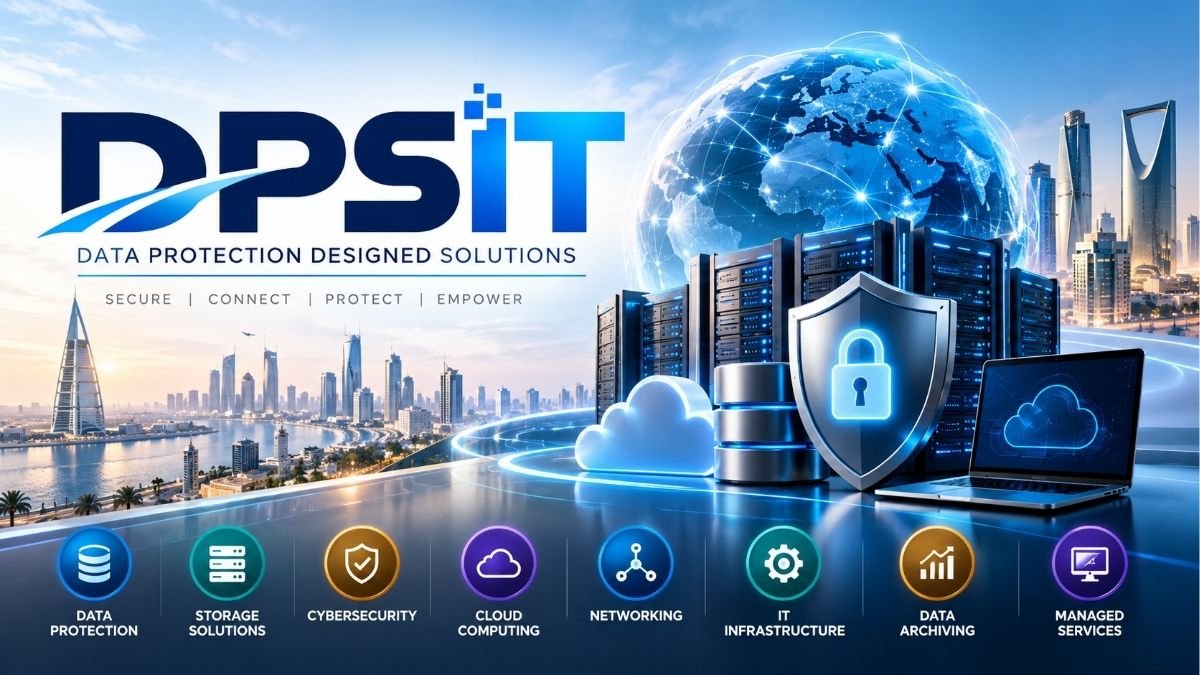
DPSIT provides professional information technology services and solutions built around business data and infrastructure. The company describes itself as operating across Sweden and Saudi Arabia and lists services and solutions involving data protection, storage, data archiving, security, data analysis, networking, cloud computing, virtualization, and broader IT infrastructure.
One important point is that readers should be careful when interpreting the name. Various websites have created different expansions for the letters “DPSIT,” but there is no clear evidence that all of those invented definitions represent an internationally recognized technology framework. In the context of the actual company, the phrase “Data Protection Designed Solutions” appears prominently in its branding. Therefore, it is more accurate to understand DPSIT as an IT business and technology-services brand rather than automatically assuming it represents a universal industry standard.
The organization’s work reflects a common challenge facing modern companies: information may be stored across servers, computers, databases, cloud applications, backup platforms, and remote locations. Managing all of those resources securely requires planning and technical expertise.
Why Data Protection Is Central to DPSIT
Protecting Business Information
Data can be one of a company’s most valuable operational assets. Customer details, contracts, financial records, project files, databases, employee information, and business applications may all depend on reliable digital storage. If critical information disappears unexpectedly, a company can face downtime, lost productivity, financial damage, and customer disruption.
For this reason, data protection is about much more than simply keeping an extra copy of a file. A well-designed protection strategy considers where information is stored, how often it changes, how quickly it must be recovered, and what could happen if the primary system fails. Organizations may need several layers of protection depending on their size, industry, and risk level.
Backup and Recovery
Backup and recovery is a fundamental part of data protection. Backup involves maintaining separate copies of important information so that it can be restored following accidental deletion, system failure, corruption, ransomware, or another disruptive event. Recovery focuses on restoring information and systems when they are needed.
The effectiveness of a backup system is not determined only by whether a backup exists. Organizations also need to consider how recently the backup was created, whether it can actually be restored, how long restoration will take, and whether it is adequately separated from the systems it protects. Businesses with critical operations may require more sophisticated approaches than companies with relatively simple technology environments.
DPSIT and Modern Storage Solutions
Digital information continues to expand as companies create more files, databases, media, communications, backups, application data, and analytical records. This growth creates a practical problem: organizations need a secure, manageable place to store everything.
Storage infrastructure can include physical systems, virtual environments, network-based storage, cloud resources, and combinations of several technologies. The right design depends on factors such as performance requirements, capacity, availability, security, budget, and future growth.
Data Archiving
Storage and data archiving are closely related, but they serve different purposes. Frequently used information usually needs fast and convenient access, while older records may need to be preserved for reference, historical value, operational requirements, or regulatory reasons. Archiving can move less-accessed information into a more appropriate long-term environment.
A structured archiving strategy can make active systems easier to manage while helping organizations retain valuable records in an organized manner. However, businesses must still consider security, retention periods, access permissions, and recovery requirements.
Cybersecurity and the Importance of Resilience
Cybersecurity has become an unavoidable part of IT planning. Organizations can face threats such as ransomware, phishing, malware, stolen credentials, unauthorized access, and exploitation of technical weaknesses. Security therefore needs to be integrated into technology decisions rather than treated as an optional extra.
Strong security typically involves multiple layers. These may include controlled access, system updates, appropriate authentication, secure configurations, network protection, monitoring, employee awareness, and reliable backups. No single technology can remove every possible risk.
The Connection Between Security and Recovery
An organization can spend heavily on preventing security incidents and still experience a problem. That is why cyber resilience includes both prevention and recovery. Companies need to consider not only how to stop attacks but also how to continue or restore operations if an incident succeeds.
Reliable backups, documented recovery processes, infrastructure assessments, and continuity planning can all strengthen resilience. The objective is to reduce disruption and give the organization a clear route back to normal operations.
Cloud Computing and DPSIT
Cloud computing has changed the way businesses purchase and operate technology. Instead of maintaining every server, application, or storage platform inside their own premises, organizations can access computing resources through cloud environments.
Cloud technology offers flexibility because capacity can be adjusted to changing requirements. Businesses can use cloud systems for storage, applications, databases, backups, virtual machines, collaboration, and many other functions.
However, moving to the cloud does not automatically solve every IT challenge. Organizations still need to consider security, permissions, costs, backup policies, availability, migration planning, and data management. A successful cloud strategy should be designed around actual business requirements rather than adopted simply because cloud technology is popular.
Hybrid Technology Environments
Many businesses do not operate entirely in the cloud. They use a combination of on-premises infrastructure and cloud-based services. This approach is often described as a hybrid environment.
Hybrid infrastructure can offer useful flexibility, but it also creates additional management requirements. Systems in different environments must communicate securely, data must be protected consistently, and administrators need sufficient visibility across the infrastructure.
Virtualization and Efficient IT Infrastructure
Virtualization is another important element of modern information technology. Traditionally, organizations might have used individual physical servers for different applications. Virtualization lets you divide computing resources into virtual systems, enabling multiple workloads to run on the same underlying hardware when properly configured.
This approach can improve hardware utilization, simplify deployment, and provide greater flexibility when managing infrastructure. Virtual machines can often be created or modified more efficiently than installing entirely new physical servers.
Virtualization nevertheless requires careful planning. Performance, resource allocation, security, backup procedures, licensing, and availability all need attention. As with cloud technology, the benefits depend heavily on implementation.
Networking and Connected Business Systems
Almost every digital business service depends on reliable networking. Employees need connections to applications, databases, cloud platforms, servers, communication tools, and shared resources. Poor network performance can reduce productivity even when individual computers and applications function properly.
Networking involves designing and managing the connections that allow devices and systems to communicate. Modern networks must balance performance with security. Businesses need to control who can access different resources while ensuring legitimate users can work without unnecessary interruption.
Remote work and cloud adoption have made network planning even more important because employees may connect from different locations rather than operating entirely inside one traditional office.
DPSIT Managed and Professional Services
DPSIT lists managed services, deployment services, consulting, outsourcing, assessments, and health checks among its service categories. These services can help when an organization needs technical expertise beyond what its internal team provides.
IT Assessments and Health Checks
An IT assessment can identify weaknesses before they become major failures. A review might examine backup configuration, storage capacity, infrastructure performance, system availability, security settings, or general technical condition.
Health checks are valuable because technology environments change over time. New employees, applications, devices, cloud services, and business requirements can make an originally suitable setup less effective several years later.
Consulting and Deployment
Consulting focuses on understanding business requirements and designing technology around those needs. Deployment moves from planning into actual implementation. Successful deployment should involve configuration, testing, documentation, and verification rather than simply installing software or hardware and assuming it works correctly.
Why Businesses Need Integrated IT Planning
One of the biggest mistakes organizations can make is managing every technology problem separately. Data protection, cloud computing, cybersecurity, storage, networking, and infrastructure are interconnected. A change in one area can affect several others.
For example, moving an application to the cloud may change backup requirements. Expanding storage may affect disaster-recovery planning. Introducing remote access may create new security considerations. Virtualizing servers may change the way applications are protected and recovered.
Integrated planning helps organizations understand these relationships before making important technology decisions. It can also reduce unnecessary complexity and encourage designing systems around business objectives rather than isolated technical features.
The Future of DPSIT and Business Technology
The future of enterprise IT will likely involve increasingly distributed systems, more cloud adoption, growing data volumes, greater automation, and continued cybersecurity pressure. Businesses will need technologies that provide both flexibility and resilience.
Artificial intelligence, advanced analytics, automated monitoring, and smarter security tools may improve organizations’ ability to identify problems and manage infrastructure. At the same time, technological complexity will keep increasing.
For companies operating in this environment, reliable data protection and recovery will remain essential. New technology can improve efficiency, but innovation also creates new dependencies. The more heavily a company relies on digital systems, the more important it becomes to protect those systems and prepare for possible interruptions.
FAQs
What is DPSIT?
DPSIT is an IT services and solutions business associated with data protection, storage, security, archiving, networking, cloud computing, virtualization, and IT infrastructure. It describes its presence as spanning Sweden and Saudi Arabia.
What does DPSIT mean?
The company’s branding displays the phrase “Data Protection Designed Solutions.” Readers may find other expansions of DPSIT online, but the term should not automatically be treated as a universally recognized technology acronym or official industry framework.
What services does DPSIT provide?
Its listed service areas include managed services, consulting, deployment, outsourcing, assessments, and health checks, alongside technology solutions covering data protection, storage, cloud infrastructure, networking, and related IT systems.
Why is data protection important for businesses?
Data protection helps organizations reduce the consequences of accidental deletion, hardware failure, software problems, ransomware, and other incidents. Effective protection normally combines backup, recovery planning, access control, monitoring, and business-continuity preparation.
Is DPSIT related to cloud computing?
Yes. Cloud computing is among the technology areas associated with DPSIT. Cloud environments can provide flexible infrastructure, storage, applications, and computing capacity, although security, costs, access, backup, and management still need careful planning.
Is DPSIT a standard technology framework?
There is no clear evidence that DPSIT is a universally standardized technology framework with one officially accepted expansion. In this article, the term refers primarily to the IT company and the technology services associated with its business.
Conclusion
DPSIT represents a modern approach to the increasingly complicated task of managing and protecting business technology. Its focus areas—including data protection, backup and recovery, storage, cybersecurity, cloud computing, virtualization, networking, archiving, and IT infrastructure—address challenges that have become critical for organizations operating in a digital environment.
The most important lesson is that modern IT should not be managed as a collection of disconnected technologies. Protecting information requires understanding how storage, networks, cloud platforms, security systems, backups, and business applications work together. A company may have powerful technology, but without proper planning, monitoring, and recovery procedures, that technology can still become a source of risk.
As digital operations continue to grow, businesses will increasingly require systems that are secure, resilient, scalable, and recoverable. DPSIT operates within this broader technology landscape, where protecting valuable data and maintaining dependable infrastructure are fundamental to long-term business continuity and digital growth.

Philip Tindall: The Remarkable Life of Mike Tindall’s Father and Former Rugby Captain

Finn Sinclair: Amazing Facts About Olivia Colman’s Son and His Private Life

Maureen E. McPhilmy: The Difficult Divorce from Bill O’Reilly and Her Life Beyond the Headlines

Jessica de Rothschild: The Remarkable Career, Family and Philanthropy of Sacha Gervasi’s Wife

Caroline Friend: The Opera Singer and Audiobook Director Behind Rosamund Pike’s Success

Ted Beckham: The Remarkable Story of David Beckham’s Father

Charlie Comer: Amazing Facts About Jodie Comer’s Brother and His Football Career

Louis Thomas Hardy: Essential Facts About Tom Hardy’s Eldest Son

Elizabeth Anne Hardy: Fascinating Facts About Tom Hardy’s Mother and Her Artistic Life

Cyndy Powell: The Inspiring Story of Glen Powell’s Mother and Her Hollywood Cameos

Mary Joan Hansen: What Is Known About Chris Hansen’s Former Wife

Debbie Paphitis: The Enduring Marriage and Private Life of Theo Paphitis’ Wife

Sam Handel: The Filmmaker, Photographer and Lauren Ambrose’s Husband

Judith Hurst: Who Is Geoff Hurst’s Wife and What Is Known About Their Life Together?

Sophie Redgrave: Who Is Sir Steve Redgrave’s Daughter and What Is Known About Her?

Nerwey Explained: The Truth Behind the Emerging Online Name and Its Digital Identity

Adele Georgiana Gianopoulos: Facts About Molly Ringwald’s Daughter

Eulala Scheel: Marcia Gay Harden’s Child, Acting Credits and Creative Career

Myreadibgmsngs: The Mysterious Search Term Explained, Its Meaning, Origins, and Online Safety

Londa Butler: What Is Publicly Known About Jimmy Butler’s Mother
Philip Tindall: The Remarkable Life of Mike Tindall’s Father and Former Rugby Captain
Finn Sinclair: Amazing Facts About Olivia Colman’s Son and His Private Life
Maureen E. McPhilmy: The Difficult Divorce from Bill O’Reilly and Her Life Beyond the Headlines
Jessica de Rothschild: The Remarkable Career, Family and Philanthropy of Sacha Gervasi’s Wife
Caroline Friend: The Opera Singer and Audiobook Director Behind Rosamund Pike’s Success
Ted Beckham: The Remarkable Story of David Beckham’s Father
Charlie Comer: Amazing Facts About Jodie Comer’s Brother and His Football Career
Louis Thomas Hardy: Essential Facts About Tom Hardy’s Eldest Son
Elizabeth Anne Hardy: Fascinating Facts About Tom Hardy’s Mother and Her Artistic Life
Cyndy Powell: The Inspiring Story of Glen Powell’s Mother and Her Hollywood Cameos
-

 Celebrity3 months ago
Tina Raver: Inspiring Facts About Kim Raver’s Supportive Mother
-

 Celebrity2 months ago
Heita Nayyar: Inspiring Family Story Behind Kunal Nayyar’s Mother
-

 Celebrity3 months ago
Tanya Flynn: The Fascinating Story of Sean Maguire’s Wife and Former Police Detective
-

 Celebrity2 months ago
Graham Rooney: The Fascinating Story of Wayne Rooney’s Younger Brother