
Technology
Proceu Explained: A Powerful Guide to Its Meaning, Uses, Benefits, and Practical Value

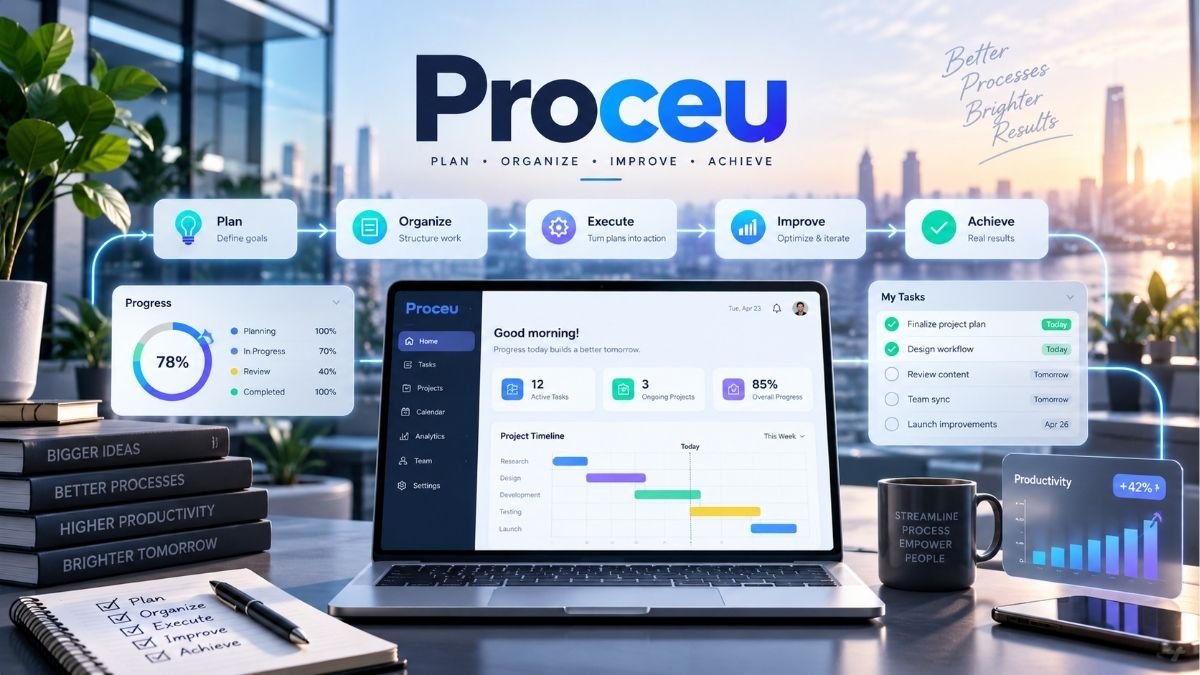
The term Proceu has started appearing across different parts of the internet, creating curiosity among people who want to understand what it actually means and why it is being discussed. Unlike established technology brands, widely recognised software platforms, or formally standardised business methodologies, Proceu does not appear to have one single definition that applies in every situation. Its meaning can depend heavily on where the term appears, who is using it, and the subject being discussed. That makes context especially important. In some situations, the name may be associated with education or professional development, while other online discussions use Proceu more generally when talking about procedures, organised workflows, productivity, or process improvement. Rather than assuming that every reference describes the same product or organisation, readers should examine the surrounding information before deciding what Proceu represents.
This article provides a clear and practical explanation of Proceu, the different ways the term may be understood, why it is gaining attention, how process-related ideas associated with it can be applied, and what users should consider before relying on information they find online.
What Is Proceu?
At its simplest, Proceu is an ambiguous term whose meaning depends on context. It should not automatically be treated as the name of a single global technology platform, software application, or officially recognised management system. Different websites and organisations may use the same or similar name for completely different purposes. This is an important distinction because search results can sometimes make an unfamiliar term appear more standardised than it actually is.
Some discussions surrounding Proceu connect the term with concepts such as process organisation, procedures, workflow efficiency, structured tasks, and continuous improvement. Under this interpretation, Proceu is less about a particular piece of software and more about the idea of making work easier to understand and manage. A business, for example, could examine the steps required to complete a task, remove unnecessary actions, clarify responsibility, and measure whether the improved process delivers better results.
However, readers should be careful not to assume that these general workflow descriptions represent an officially defined Proceu framework. When researching the term, the safest approach is to determine exactly which organisation, website, project, educational service, or concept is being referenced.
Why Has Proceu Attracted Attention?
One reason unfamiliar terms such as Proceu gain attention is that modern users regularly search for better ways to organise work, education, technology, and everyday responsibilities. Businesses are increasingly focused on automation, efficiency, collaboration, and reducing repetitive work, while individuals want tools and approaches that help them manage tasks without creating unnecessary complexity.
The idea often associated with Proceu fits naturally into this wider interest. When people hear about a method that might improve workflows or simplify procedures, they naturally want to know whether it can save time, reduce mistakes, or make responsibilities clearer. Search interest can then grow rapidly, even before the term has developed a universally accepted definition.
This is why users should separate genuine information from generalised descriptions. Popularity alone does not establish what a term means. Reliable research requires looking at the exact context in which Proceu is being discussed rather than combining unrelated uses of the same name.
Understanding Proceu Through Processes and Procedures
One useful way to understand the workflow-related interpretation of Proceu is by examining the difference between a process and a procedure. A process describes the broader sequence of activities required to achieve a result, while a procedure explains how a particular task within that process should be completed.
Imagine an online business processing a customer order. The complete order journey is a process. It might include receiving the order, verifying payment, preparing the product, arranging delivery, and confirming completion. Each individual stage may then have its own procedure explaining exactly what employees or systems need to do.
When processes and procedures are clearly organised, work becomes more predictable. Employees understand their responsibilities, managers can identify delays, and organisations can discover opportunities for improvement. This basic principle is relevant regardless of whether a company chooses to associate it with the Proceu name.
The Importance of Clear Workflow Management
Modern organisations often suffer from unnecessary complexity. A simple task may require several approvals, repeated data entry, multiple messages, or movement between disconnected systems. Individually these delays may appear small, but across hundreds or thousands of tasks they can significantly affect productivity.
A structured workflow aims to create a clear path from beginning to completion. Each stage should have a purpose. Responsibilities should be understandable, information should reach the right person at the correct time, and unnecessary repetition should be reduced.
If Proceu is being discussed in a workflow context, these principles provide a useful way of interpreting its potential value. The goal is not simply to make employees work faster. Effective process improvement focuses on making work more consistent, understandable, measurable, and reliable.
Key Principles Commonly Associated With Proceu
Simplicity and Clear Organisation
One of the strongest principles connected with effective workflow management is simplicity. Complicated systems are not automatically better systems. Every extra approval, communication channel, spreadsheet, or manual step creates another opportunity for confusion.
A Proceu-style approach to organisation would therefore encourage users to identify what is truly necessary. A process should contain enough structure to produce reliable results without becoming overloaded with unnecessary steps.
Consistency in Daily Tasks
Consistency is equally important. When employees complete the same task in completely different ways, quality becomes difficult to control. Clearly documented procedures can reduce this problem by giving teams a shared method for completing repetitive responsibilities.
Consistency does not mean organisations should eliminate flexibility. Instead, routine tasks should have a dependable foundation while employees retain appropriate freedom when unusual situations require professional judgement.
Continuous Improvement
Processes should not remain unchanged forever. Technology develops, customer expectations change, companies grow, and working habits evolve. A system that worked perfectly three years ago may contain unnecessary steps today.
Continuous improvement involves reviewing workflows regularly and asking practical questions. Which tasks create delays? Where do mistakes repeatedly occur? Which steps no longer provide value? Could technology handle repetitive work more efficiently? These questions can lead to gradual improvements without requiring organisations to rebuild their entire operation.
Potential Benefits of Using Structured Proceu Principles
When Proceu is interpreted as an approach centred on better organisation and processes, several potential advantages become clear. The first is time efficiency. Removing unnecessary activities allows employees to spend more attention on work that actually contributes to results.
Another benefit is fewer avoidable mistakes. Clear procedures can reduce uncertainty because users know exactly what information is required and what should happen next. Better organisation can also improve collaboration. Instead of repeatedly asking who is responsible for a task, teams can work from an established process with defined responsibilities.
Structured processes can additionally make training easier. New employees often struggle when important knowledge exists only in the minds of experienced colleagues. Documenting procedures converts that knowledge into something that can be shared, reviewed, and improved.
How Businesses Could Apply Proceu-Style Thinking
A business interested in process improvement does not necessarily need expensive software or a complicated transformation programme. It can begin by selecting one common workflow and documenting how the task currently works.
Managers can then identify every significant step, determine who is responsible, and examine how information moves through the process. Once the existing workflow is visible, inefficient areas become easier to identify.
For example, a business might discover that customer enquiries are being copied manually between multiple systems. Another company may find that invoices require approvals from employees who no longer need to participate. A marketing department could realise that several team members are maintaining separate versions of the same information.
The objective is to remove friction without removing necessary controls. Simplification should improve the quality of a process rather than simply reducing the number of steps.
The Role of Technology and Automation
Technology can support organised processes, but software should not be confused with the process itself. Buying a sophisticated automation platform will not automatically repair a badly designed workflow. In some cases, automation can simply make an inefficient process operate inefficiently at a faster speed.
Organisations should therefore understand the workflow first. Once the correct steps are identified, technology can handle suitable repetitive activities such as notifications, data transfers, scheduling, reporting, document creation, or routine status updates.
Human judgement remains important. Decisions involving unusual circumstances, sensitive communication, quality evaluation, or strategic thinking may still require people rather than automated systems. The most effective approach normally combines clear processes, appropriate technology, and human oversight.
Proceu in Education and Professional Development
Another reason the term can cause confusion is that names resembling or using ProCEU also appear in educational contexts. The letters “CEU” are commonly associated with continuing education terminology, which means someone searching for Proceu may encounter information related to courses, training, professional learning, or educational organisations rather than workflow management.
Because these uses may represent separate organisations or projects, readers should not combine them automatically. Checking the organisation’s full name, geographical location, purpose, and services can quickly establish whether a particular Proceu reference relates to professional education or something completely different.
This distinction is especially important when someone is considering paying for education or using a course to satisfy professional requirements. Users should confirm recognition, eligibility, accreditation where relevant, and the requirements of their own profession before relying on any educational programme.
How to Research Proceu Safely
Because Proceu can refer to different things, research should begin with context rather than assumptions. Look at the complete name being used and identify whether the surrounding information discusses education, business processes, software, training, productivity, or another subject.
Users should also examine whether specific claims are supported with identifiable information. A genuine organisation will normally provide clear details about what it does, while a recognised methodology should have understandable principles, documentation, or identifiable origins.
Be particularly cautious with articles that make dramatic claims without explaining exactly what Proceu is. Statements suggesting that an undefined system is “revolutionising every industry” or guaranteeing major productivity improvements deserve careful examination.
Common Misunderstandings About Proceu
A major misunderstanding is assuming that every website mentioning Proceu is discussing the same thing. This is not necessarily the case. Another mistake is treating the term as automatically referring to dedicated software. Generic discussions about workflow optimisation do not prove that a specific Proceu software platform exists.
Users may also confuse conceptual benefits with guaranteed outcomes. Better procedures can improve an organisation, but success still depends on implementation, employee participation, management decisions, technology, and the quality of the process itself.
Understanding these limitations makes research more useful and prevents exaggerated expectations.
The Future of Process-Focused Working
Regardless of how the Proceu term develops, the broader principles connected with efficient processes are likely to remain relevant. Businesses are managing increasing amounts of information while employees regularly work across multiple digital platforms. As complexity increases, organisations have a stronger incentive to simplify workflows and automate appropriate tasks.
Future systems may combine automation, artificial intelligence, analytics, collaboration tools, and human decision-making more closely. However, technology alone cannot replace good process design. Organisations will still need to understand what they are trying to achieve, determine which steps create genuine value, and regularly evaluate whether their methods are working.
The long-term lesson associated with process-focused thinking is therefore straightforward: clarity should come before complexity.
FAQs About Proceu
What is Proceu?
Proceu is a term that can have different meanings depending on context. It may appear in connection with education or be used in online discussions about processes, procedures, workflow organisation, and productivity. Users should identify the specific context before assuming one definition.
Is Proceu a software platform?
Proceu should not automatically be described as a single established software platform. Some online content discusses it alongside workflow and automation concepts, but the term can also be associated with unrelated organisations or educational activities.
What are the possible benefits of Proceu-style workflow management?
Potential benefits include clearer responsibilities, better organisation, reduced repetitive work, improved consistency, fewer avoidable errors, easier training, and greater operational efficiency.
Can small businesses use these principles?
Yes. Small businesses can benefit from documenting recurring tasks, removing unnecessary steps, assigning clear responsibilities, and using appropriate automation where it provides practical value.
Why is there confusion about the meaning of Proceu?
The confusion exists because similar or identical names may be used in different contexts. In addition, some websites describe Proceu as a general workflow concept without clearly identifying a specific organisation, product, or officially established framework.
Is Proceu suitable for every industry?
General principles such as improving procedures, simplifying workflows, and reviewing repetitive tasks can be useful across many industries. However, the specific implementation should always reflect the organisation’s requirements, regulations, risks, and working environment.
Conclusion
Proceu is best understood by examining its context rather than relying on a single broad definition. The term appears in different settings, and readers should avoid assuming that every reference describes the same organisation, software product, or methodology. When Proceu is discussed in connection with workflow improvement, the underlying ideas—clear processes, useful procedures, simplicity, consistency, automation where appropriate, and continuous improvement—can provide meaningful value.
For businesses and individuals, the most practical lesson is to focus on the quality of the process rather than the popularity of a label. Clearly defined responsibilities, fewer unnecessary steps, reliable procedures, and regular evaluation can make work easier to manage and improve long-term efficiency. At the same time, anyone researching a particular Proceu organisation, educational service, platform, or project should verify exactly which entity is involved before making decisions based on online information.

Philip Tindall: The Remarkable Life of Mike Tindall’s Father and Former Rugby Captain

Finn Sinclair: Amazing Facts About Olivia Colman’s Son and His Private Life

Maureen E. McPhilmy: The Difficult Divorce from Bill O’Reilly and Her Life Beyond the Headlines

Jessica de Rothschild: The Remarkable Career, Family and Philanthropy of Sacha Gervasi’s Wife

Caroline Friend: The Opera Singer and Audiobook Director Behind Rosamund Pike’s Success

Ted Beckham: The Remarkable Story of David Beckham’s Father

Charlie Comer: Amazing Facts About Jodie Comer’s Brother and His Football Career

Louis Thomas Hardy: Essential Facts About Tom Hardy’s Eldest Son

Elizabeth Anne Hardy: Fascinating Facts About Tom Hardy’s Mother and Her Artistic Life

Cyndy Powell: The Inspiring Story of Glen Powell’s Mother and Her Hollywood Cameos

Mary Joan Hansen: What Is Known About Chris Hansen’s Former Wife

Debbie Paphitis: The Enduring Marriage and Private Life of Theo Paphitis’ Wife

Sam Handel: The Filmmaker, Photographer and Lauren Ambrose’s Husband

Judith Hurst: Who Is Geoff Hurst’s Wife and What Is Known About Their Life Together?

Sophie Redgrave: Who Is Sir Steve Redgrave’s Daughter and What Is Known About Her?

Nerwey Explained: The Truth Behind the Emerging Online Name and Its Digital Identity

Adele Georgiana Gianopoulos: Facts About Molly Ringwald’s Daughter

Eulala Scheel: Marcia Gay Harden’s Child, Acting Credits and Creative Career

Myreadibgmsngs: The Mysterious Search Term Explained, Its Meaning, Origins, and Online Safety

Londa Butler: What Is Publicly Known About Jimmy Butler’s Mother
Philip Tindall: The Remarkable Life of Mike Tindall’s Father and Former Rugby Captain
Finn Sinclair: Amazing Facts About Olivia Colman’s Son and His Private Life
Maureen E. McPhilmy: The Difficult Divorce from Bill O’Reilly and Her Life Beyond the Headlines
Jessica de Rothschild: The Remarkable Career, Family and Philanthropy of Sacha Gervasi’s Wife
Caroline Friend: The Opera Singer and Audiobook Director Behind Rosamund Pike’s Success
Ted Beckham: The Remarkable Story of David Beckham’s Father
Charlie Comer: Amazing Facts About Jodie Comer’s Brother and His Football Career
Louis Thomas Hardy: Essential Facts About Tom Hardy’s Eldest Son
Elizabeth Anne Hardy: Fascinating Facts About Tom Hardy’s Mother and Her Artistic Life
Cyndy Powell: The Inspiring Story of Glen Powell’s Mother and Her Hollywood Cameos
-

 Celebrity3 months ago
Tina Raver: Inspiring Facts About Kim Raver’s Supportive Mother
-

 Celebrity2 months ago
Heita Nayyar: Inspiring Family Story Behind Kunal Nayyar’s Mother
-

 Celebrity3 months ago
Tanya Flynn: The Fascinating Story of Sean Maguire’s Wife and Former Police Detective
-

 Celebrity2 months ago
Graham Rooney: The Fascinating Story of Wayne Rooney’s Younger Brother