
Technology
Board Bell: The Simple Signaling Tool That Still Has a Place in Modern Life

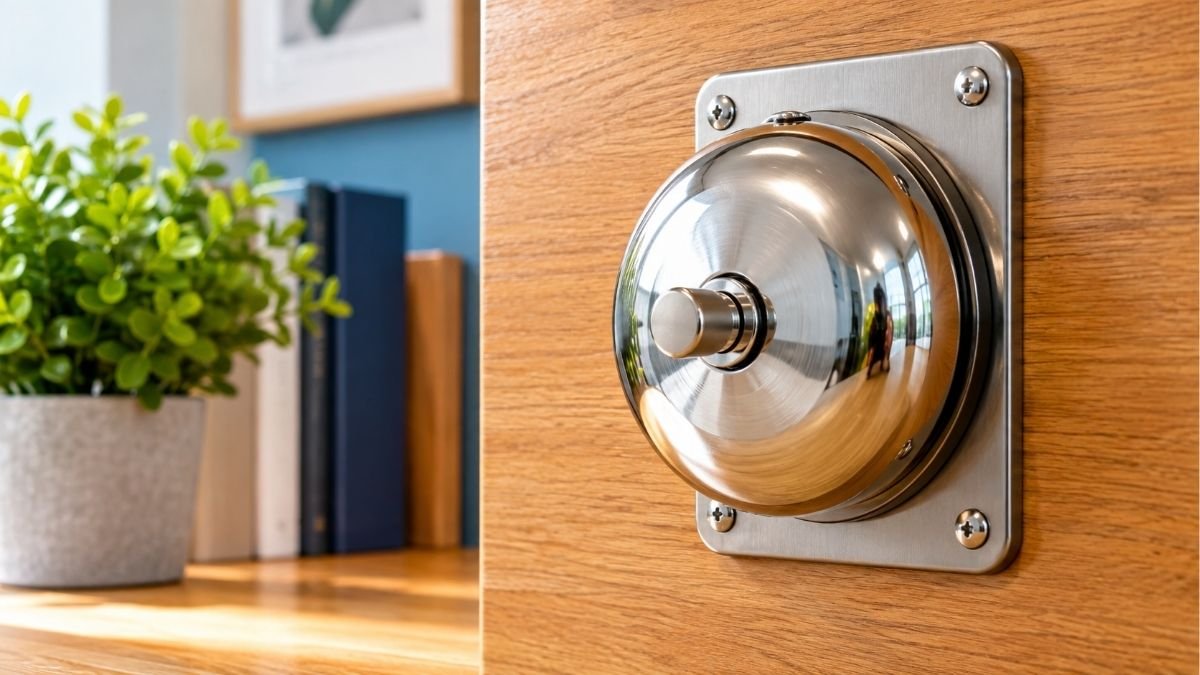
A board bell may look like a remarkably simple object, but its usefulness can extend across classrooms, reception areas, games, activity boards, service counters, training spaces, and other environments where a clear audible signal is needed. Depending on its design, the term can describe a compact mechanical bell mounted on a board or surface, or a tabletop-style push bell used alongside educational boards, games, or workplace equipment. The basic purpose remains similar: a user activates the mechanism and produces a recognizable sound that quickly attracts attention.
What makes the board bell interesting is that it achieves its purpose without complicated technology. There is usually no need for software, charging, wireless connectivity, or elaborate installation. A mechanical action creates an audible response almost instantly. That simplicity can make the bell valuable in situations where people need an immediate, easy-to-understand signal. Although modern electronic notification systems are common, a traditional bell continues to offer reliability, accessibility, and straightforward operation.
What Is a Board Bell?
A board bell can generally be understood as a compact signaling bell designed to be placed on, attached to, or used with a board, desk, counter, activity panel, or similar surface. The precise appearance varies by product and intended application. Some models resemble the classic service bell found on a reception desk, while others can be incorporated into educational or interactive boards where pressing, pulling, or moving a component creates a ringing sound.
The bell normally contains a metal bell body, a striking component, and an activation mechanism. When the user presses or moves the activating part, the striker contacts the bell surface and causes it to vibrate. Those vibrations create the familiar ringing sound. A well-designed bell provides a clear tone without demanding much force from the user.
Its simplicity is one of its greatest strengths. Unlike electronic signaling equipment, a mechanical board bell can often remain usable without batteries or a power connection. This makes it suitable for places where a basic audible signal is more practical than a digital notification.
How Does a Board Bell Work?
The working principle behind most board bells is mechanical. When someone activates the push button, lever, handle, or striker, energy is transferred through the internal mechanism. The striker then makes contact with the bell body, causing the metal to vibrate. These vibrations move through the surrounding air as sound waves, creating a clear ringing tone.
The quality of the sound depends on several factors, including the bell’s material, thickness, shape, striker position, and construction. A properly designed bell should produce a noticeable sound without requiring excessive pressure. The mechanism should also return smoothly to its original position so it is ready to ring again.
Some designs use a spring-assisted mechanism. After the button or lever is pressed, the spring helps return the striker to its resting position. This small engineering feature can improve consistency and make repeated operation easier.
Common Uses of a Board Bell
One reason the board bell remains relevant is its versatility. The same basic signaling idea can serve very different purposes depending on the setting. In a reception area or service counter, a bell can allow visitors to indicate that they are waiting for assistance when an employee is temporarily away from the desk. The distinctive ring provides a simple notification without requiring the visitor to call out loudly.
In classrooms, a bell may be used by teachers to gain attention, mark the beginning or end of an activity, or create an interactive element during lessons. Educational activity boards can also incorporate bells so children learn cause and effect: an action such as pressing or moving a component produces an immediate sound.
Board bells are also popular in games and competitions. Players may press the bell when they know an answer, complete a challenge, or want to signal their turn. Because the ringing sound is immediate and easy for everyone to recognize, it can help make games feel more organized and energetic.
Board Bell for Games and Group Activities
A board bell for games can create a clear way to determine who responds first. Quiz games, classroom competitions, family activities, and party games can all benefit from a simple audible signal. Instead of participants arguing about who raised a hand first, the bell creates a noticeable action that everyone can hear.
The bell can also add entertainment value. A crisp ringing sound makes a competition feel more engaging and provides instant feedback when a player completes a task. For younger users, pressing the bell can itself become part of the enjoyment.
Why the Board Bell Is Still Useful
Modern environments contain countless digital devices, yet not every basic task requires electronics. A mechanical board bell demonstrates the practical value of simplicity. It does one main job and usually requires very little preparation to perform it.
Another advantage is immediate feedback. When someone presses the bell, the result is instantaneous. There are no menus, screens, pairing procedures, or network connections involved. This direct relationship between action and sound makes a bell easy for people of different ages to understand.
A board bell can also function during power interruptions or in locations without convenient electrical access. Its simple mechanical construction means that, provided the physical components remain in good condition, it can continue operating independently of external power.
Important Features of a Good Board Bell
Not every bell offers the same quality. One of the first things to examine is the sound clarity. A useful bell should create a clean, recognizable tone rather than a weak or unpleasant metallic noise. The sound should be loud enough for its intended setting without being unnecessarily harsh.
Construction quality is equally important. Metal is frequently associated with bells because it can provide durability and effective vibration. The base should feel stable when the bell is pressed, particularly if the product will be used repeatedly during games, classroom activities, or customer service.
The activation mechanism should move smoothly. A button that sticks or requires excessive force can quickly become frustrating. For frequent use, users should look for a mechanism that provides a consistent response with normal pressure.
Size and portability may also matter. A compact bell can be moved between rooms, stored easily, and placed on a desk without occupying significant space. A board-mounted design, meanwhile, should have an appropriate attachment system for the surface on which it will be installed.
Board Bell in Educational Environments
Educational spaces can make creative use of a board bell. Teachers may use the sound as an attention signal, allowing students to associate a specific ring with a classroom instruction. With consistent use, a bell can sometimes provide a faster signal than repeatedly raising one’s voice.
Interactive boards for younger learners may incorporate bells to support sensory exploration and hand-eye coordination activities. Pressing a button and immediately hearing a sound teaches a basic cause-and-effect relationship. The physical motion involved can also encourage interaction with other components on an activity board.
However, products used by young children should always be chosen according to their age and the manufacturer’s safety guidance. Small detachable parts, sharp edges, or poorly secured components can create unnecessary risks. Adult supervision may be appropriate depending on the design and age group.
Board Bell for Offices and Reception Areas
In a professional environment, a bell can serve as a low-cost communication tool. A small office, reception desk, shop counter, or service station may not require an expensive electronic notification system. A desk board bell can provide customers with an obvious way to request attention.
Placement matters in this environment. The bell should be visible and easy to reach without obstructing the working area. If the bell is used frequently, choosing a durable base and reliable mechanism becomes especially important.
Sound level should also match the environment. An extremely loud bell may be disruptive in a quiet office, while a very soft bell may not be heard in a busy workspace. The best choice depends on room size, background noise, and how far the sound needs to travel.
How to Choose the Right Board Bell
Before purchasing or selecting a board bell, think about how it will actually be used. A bell intended for a classroom game may need a fast, responsive button, while one used at a customer service desk may benefit from a more refined appearance and stable construction. An activity-board bell may require secure mounting and child-appropriate design.
Material quality should be considered alongside price. A cheaper bell is not automatically a poor choice, but weak components may wear out faster when subjected to frequent use. Examine the mechanism, base stability, surface finish, and overall build whenever possible.
Sound is another important consideration. If the bell will be used in a large room, it should produce sufficient volume. For a smaller or quieter area, a softer sound may be more comfortable.
Cleaning and Maintaining a Board Bell
A board bell generally requires limited maintenance, but basic care can extend its useful life. Dust and dirt should be removed regularly, particularly around the button or moving mechanism. A soft dry or slightly damp cloth is often suitable for exterior cleaning, although users should follow any care instructions provided with their specific product.
Avoid allowing excessive moisture to enter mechanical components, especially if the bell contains metal parts that could corrode over time. If the button begins sticking, first check for dirt or physical obstruction rather than forcing it.
A bell installed on a board or wall should also be checked periodically to make sure its mounting remains secure. Repeated pressing can gradually loosen weak fasteners, so occasional inspection is sensible.
Advantages of a Board Bell
The biggest advantage of the board bell is its uncomplicated operation. Most people can understand how to use one immediately. It provides an audible signal without requiring technical knowledge and can fit naturally into many environments.
Other useful characteristics include portability, quick response, mechanical reliability, easy storage, and multipurpose use. Depending on the design, the same style of bell may be useful for service counters, lessons, competitions, home activities, training exercises, or entertainment.
Its limitations should also be recognized. A traditional bell cannot send remote notifications, record interactions, or integrate with sophisticated digital systems unless additional technology is added. It is best viewed as a straightforward local signaling device rather than a substitute for advanced communication equipment.
FAQs
What is a board bell used for?
A board bell is generally used to create a quick audible signal. Depending on its design, it can be used for games, classrooms, reception counters, activity boards, competitions, and general attention signaling.
Does a board bell need electricity?
Many traditional board bells work mechanically and therefore do not need electricity or batteries. However, specialized electronic versions may use power, so specifications should always be checked.
Can a board bell be used for classroom activities?
Yes. Bells can be useful for quizzes, classroom games, attention signals, and interactive learning activities when used appropriately.
What material is best for a board bell?
Metal is commonly suitable for the bell body because it produces effective vibration and can offer good durability. Overall build quality, however, is more important than material alone.
How do I choose a good board bell?
Consider sound quality, construction, stability, activation mechanism, size, intended use, safety, and durability. The ideal design depends on where and how frequently the bell will be used.
Conclusion
The board bell is a small but surprisingly adaptable signaling tool. Its value comes from a simple principle: one physical action creates an immediate and recognizable sound. That simplicity allows it to work in classrooms, games, reception areas, interactive boards, service environments, and many other settings without requiring complicated equipment.
Choosing the right bell involves more than finding the cheapest option. Clear sound, durable construction, smooth operation, stable placement, appropriate size, and safe design can all affect how well a bell performs. For users who only need an uncomplicated way to produce an audible signal, the board bell remains a practical solution even in an increasingly digital world.

Philip Tindall: The Remarkable Life of Mike Tindall’s Father and Former Rugby Captain

Finn Sinclair: Amazing Facts About Olivia Colman’s Son and His Private Life

Maureen E. McPhilmy: The Difficult Divorce from Bill O’Reilly and Her Life Beyond the Headlines

Jessica de Rothschild: The Remarkable Career, Family and Philanthropy of Sacha Gervasi’s Wife

Caroline Friend: The Opera Singer and Audiobook Director Behind Rosamund Pike’s Success

Ted Beckham: The Remarkable Story of David Beckham’s Father

Charlie Comer: Amazing Facts About Jodie Comer’s Brother and His Football Career

Louis Thomas Hardy: Essential Facts About Tom Hardy’s Eldest Son

Elizabeth Anne Hardy: Fascinating Facts About Tom Hardy’s Mother and Her Artistic Life

Cyndy Powell: The Inspiring Story of Glen Powell’s Mother and Her Hollywood Cameos

Mary Joan Hansen: What Is Known About Chris Hansen’s Former Wife

Debbie Paphitis: The Enduring Marriage and Private Life of Theo Paphitis’ Wife

Sam Handel: The Filmmaker, Photographer and Lauren Ambrose’s Husband

Judith Hurst: Who Is Geoff Hurst’s Wife and What Is Known About Their Life Together?

Sophie Redgrave: Who Is Sir Steve Redgrave’s Daughter and What Is Known About Her?

Nerwey Explained: The Truth Behind the Emerging Online Name and Its Digital Identity

Adele Georgiana Gianopoulos: Facts About Molly Ringwald’s Daughter

Eulala Scheel: Marcia Gay Harden’s Child, Acting Credits and Creative Career

Londa Butler: What Is Publicly Known About Jimmy Butler’s Mother

Michael Galeotti: Enation Musician and Bethany Joy Lenz’s Ex-Husband
Philip Tindall: The Remarkable Life of Mike Tindall’s Father and Former Rugby Captain
Finn Sinclair: Amazing Facts About Olivia Colman’s Son and His Private Life
Maureen E. McPhilmy: The Difficult Divorce from Bill O’Reilly and Her Life Beyond the Headlines
Jessica de Rothschild: The Remarkable Career, Family and Philanthropy of Sacha Gervasi’s Wife
Caroline Friend: The Opera Singer and Audiobook Director Behind Rosamund Pike’s Success
Ted Beckham: The Remarkable Story of David Beckham’s Father
Charlie Comer: Amazing Facts About Jodie Comer’s Brother and His Football Career
Louis Thomas Hardy: Essential Facts About Tom Hardy’s Eldest Son
Elizabeth Anne Hardy: Fascinating Facts About Tom Hardy’s Mother and Her Artistic Life
Cyndy Powell: The Inspiring Story of Glen Powell’s Mother and Her Hollywood Cameos
-

 Celebrity3 months ago
Tina Raver: Inspiring Facts About Kim Raver’s Supportive Mother
-

 Celebrity2 months ago
Heita Nayyar: Inspiring Family Story Behind Kunal Nayyar’s Mother
-

 Celebrity3 months ago
Tanya Flynn: The Fascinating Story of Sean Maguire’s Wife and Former Police Detective
-

 Celebrity2 months ago
Graham Rooney: The Fascinating Story of Wayne Rooney’s Younger Brother