Technology
HRMtaila: A Powerful Look at the Emerging Future of AI-Powered Human Resource Management

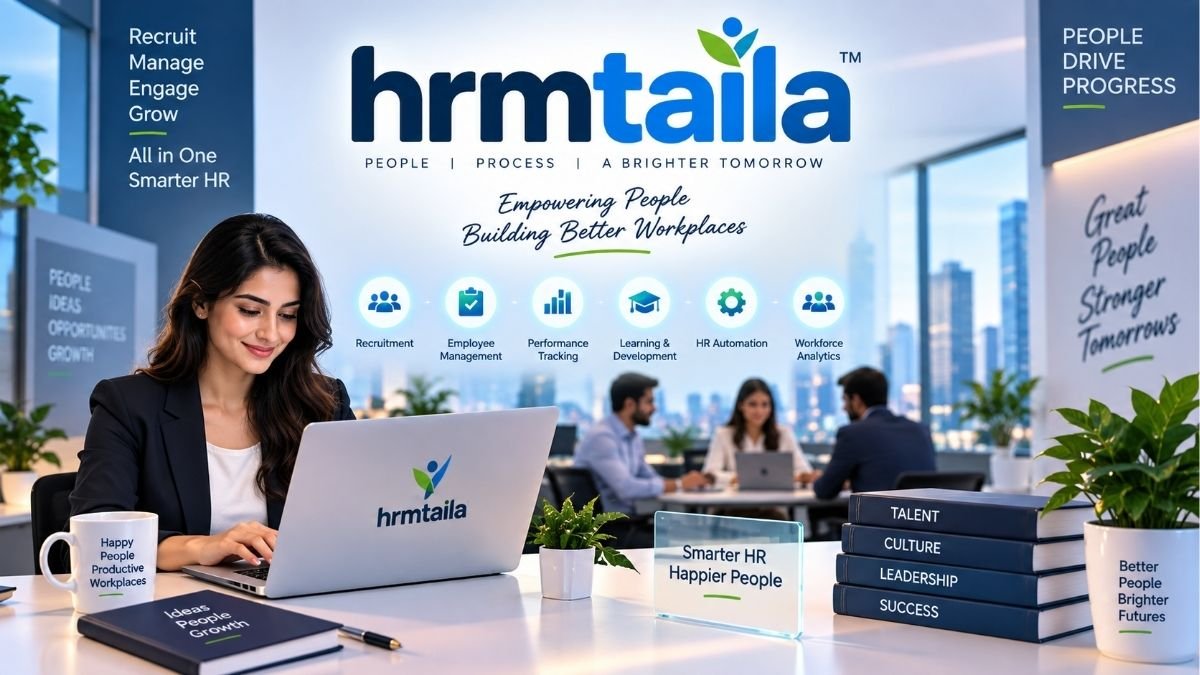
The modern workplace is changing at a remarkable pace. Recruitment is becoming increasingly digital, employee records are moving away from paper-based systems, routine administrative work can be automated, and artificial intelligence is beginning to assist HR professionals with information that previously required hours of manual review. Within this changing environment, HRMtaila has emerged as an unusual keyword associated with human resource management, artificial intelligence, workplace automation, and digital HR technology. The term has attracted attention partly because people are trying to understand whether it represents a specific platform, a new technology, or a broader concept connected with smarter human resource management.
At present, HRMtaila does not have a universally established definition that can be treated as an official industry standard. There is also insufficient reliable public information to confidently describe it as a major commercial software company with a documented founder, headquarters, launch history, or confirmed product portfolio. Instead, the safest and most useful way to understand HRMtaila is as an emerging online term associated with the growing intersection of artificial intelligence and Human Resource Management. Looking at it from that perspective provides a much clearer picture of why the keyword is appearing in discussions about recruitment, employee management, workforce data, automation, and the future of work.
What Is HRMtaila?
HRMtaila can currently be understood as a term connected with the idea of making human resource management more intelligent, automated, organized, and data-driven. The first part of the word, “HRM,” naturally resembles the widely used abbreviation for Human Resource Management, although the complete origin and intended meaning of the name have not been publicly established. Because of that uncertainty, it would be misleading to assign a detailed technical definition to the term or claim that every feature associated with modern HR technology officially belongs to HRMtaila.
From a practical perspective, however, discussions surrounding HRMtaila fit closely with the wider transformation already taking place in HR departments. Businesses increasingly rely on digital systems for recruiting employees, organizing records, tracking attendance, managing onboarding, supporting staff, monitoring training, preparing reports, and understanding workforce trends. Adding AI-powered tools to these systems can potentially make repetitive processes faster while allowing HR professionals to concentrate more attention on situations requiring human judgement, communication, empathy, and leadership.
Why HRMtaila Is Gaining Attention
The interest surrounding HRMtaila reflects a much larger change in how organizations think about technology and employees. For many years, HR departments relied heavily on spreadsheets, emails, physical documents, and disconnected software systems. As organizations expanded, managing information across those separate systems became increasingly difficult. Modern digital HR platforms attempt to bring important information into more organized environments, while automation can reduce some of the repetitive work involved in maintaining those systems.
Artificial intelligence has added another layer to this transformation. Instead of technology simply storing information, intelligent systems can help categorize data, identify patterns, produce summaries, answer routine questions, and assist people in navigating large amounts of information. This is the environment in which HRMtaila has become relevant as a search term. Its growing visibility does not necessarily prove the existence of one specific product; rather, it highlights public interest in the possibility of combining HR management, automation, analytics, and AI within more connected workplace systems.
HRMtaila and the Role of Artificial Intelligence in HR
Artificial intelligence does not need to replace an HR department to be useful. Its more realistic role is often supporting repetitive or information-heavy work. HR teams deal with enormous quantities of documents, applications, schedules, policies, performance information, employee questions, and administrative records. When carefully implemented, technology can help organize some of this information and make it easier for professionals to locate what they need.
For example, an AI-assisted HR environment may help summarize documents, classify common employee questions, organize candidate information, support scheduling, identify missing information in records, or prepare workforce reports. These capabilities represent the broader technological direction often associated with HRMtaila. However, important employment decisions still require appropriate human oversight. Hiring, dismissal, promotion, disciplinary decisions, workplace disputes, accessibility needs, and sensitive employee concerns involve context that cannot simply be reduced to automated recommendations.
Recruitment and Hiring in an HRMtaila-Style Environment
Recruitment is one of the clearest areas where intelligent technology can support HR professionals. A company may receive hundreds or even thousands of applications for open positions, creating a considerable administrative burden. Digital tools can help organize applications, track recruitment stages, schedule interviews, and maintain communication records. AI may also assist recruiters in searching and categorizing large amounts of candidate information.
The important distinction is between supporting recruitment and controlling recruitment. Automated systems can save time, but hiring decisions should not blindly depend on algorithms. Historical workforce data may contain patterns or biases that can be repeated by poorly designed systems. Organizations therefore need clear standards for how technology is used, which information it analyzes, and where human review is mandatory. If HRMtaila is understood as a vision for smarter HR, responsible human supervision would have to be one of its most important principles.
Making Employee Onboarding More Organized
The first few days in a new job can involve contracts, training materials, workplace policies, account creation, benefit information, introductions, equipment requests, and numerous questions. When onboarding is handled manually, information can become scattered across email threads and documents. A well-designed digital system can create a more structured process by showing new employees what needs to be completed and giving HR teams a clearer overview of progress.
This is another area where the concept surrounding HRMtaila becomes easy to understand. Automation could handle reminders and routine administrative steps while HR professionals concentrate on the human side of welcoming employees into an organization. Technology might make onboarding more efficient, but personal communication remains essential because joining a workplace is a social experience as much as an administrative one.
Workforce Analytics and Better Understanding of HR Data
Companies generate large amounts of workforce information, including staffing levels, attendance patterns, training participation, turnover figures, recruitment activity, and performance-related data. Individually, these figures may reveal little. When organized properly, however, workforce analytics can help managers understand broader patterns and make more informed plans.
The idea frequently associated with HRMtaila fits this development. Intelligent analytical systems can potentially help decision-makers explore workforce information more efficiently and identify areas requiring closer attention. A rise in employee turnover within one department, for example, might encourage management to investigate working conditions, leadership issues, compensation, career opportunities, or workload pressures. Analytics can highlight a pattern, but it does not automatically explain why that pattern exists. Human investigation and contextual understanding remain necessary.
Automating Repetitive Administrative Work
One of the most practical benefits of digital HR technology is reducing unnecessary repetition. HR employees often spend considerable time updating records, answering similar questions, preparing standard documents, sending reminders, coordinating schedules, and transferring information between systems. These activities are necessary, but they can consume time that could otherwise be devoted to employee development, workplace culture, strategic planning, and complex staff concerns.
An HRMtaila-style approach would logically focus on intelligent automation of appropriate routine tasks. Automated notifications, digital forms, structured workflows, searchable knowledge systems, and self-service tools can make everyday administration more efficient. The objective should not simply be eliminating human involvement. Good automation removes avoidable friction so that people have more time for responsibilities where judgement and personal interaction matter.
Employee Support Still Requires a Human Element
The enthusiasm around artificial intelligence sometimes creates the impression that every workplace interaction can eventually be automated. Human resources demonstrates why that assumption is unrealistic. Employees speak with HR about sensitive issues involving relationships with colleagues, workplace stress, family responsibilities, grievances, accommodations, career concerns, disciplinary processes, and personal circumstances. These conversations require discretion, empathy, fairness, and contextual judgement.
Technology connected with HRMtaila could make policies easier to find or help employees locate routine information, but it should not eliminate access to qualified human professionals. An employee asking how to download a standard document may be perfectly served by an automated system. Someone reporting harassment or discrimination requires a completely different level of attention. Successful digital HR therefore depends on knowing where automation is appropriate and where meaningful human involvement is essential.
Privacy and Security Are Major Considerations
Human resource departments manage some of the most sensitive information within an organization. Depending on the workplace, HR records may include contact information, salaries, identification details, employment history, performance documentation, attendance records, and other confidential data. Any organization adopting AI-assisted HR technology must therefore take data privacy and security seriously.
Businesses should understand what information a system collects, where that information is stored, who can access it, how long it is retained, and whether it is shared with third parties. Employees should also have appropriate transparency about automated systems that influence workplace processes. Advanced technology may make HR more efficient, but efficiency should never come at the cost of careless handling of confidential employee information.
HRMtaila Should Not Be Confused With a Verified Product
One of the most important points for readers researching HRMtaila is that an emerging keyword should not automatically be treated as an established software brand. A genuine commercial HR platform would normally be expected to provide identifiable company information, official documentation, terms of service, privacy policies, product specifications, support information, pricing or sales details, and clear descriptions of its technology.
Until comparable authoritative information is available for HRMtaila, readers should be cautious about claims presenting it as a fully documented platform with a fixed list of features. Statements about a specific founder, launch date, customer base, headquarters, pricing structure, mobile application, or proprietary technology should require reliable evidence. Treating uncertainty openly is more useful than filling informational gaps with attractive but unsupported claims.
Benefits of the Broader HRMtaila Concept
When interpreted as a broader approach to AI-assisted human resource management, HRMtaila represents several potentially useful ideas. Automation can reduce repetitive administrative work, centralized digital records can make information easier to organize, analytics can improve visibility into workforce patterns, and AI tools may help employees access routine information more quickly. Together, these capabilities could help HR departments operate with greater consistency and efficiency.
The greatest benefit, however, may come from using technology to support people rather than attempting to replace them. HR professionals deal with complicated human situations that cannot always be represented accurately through data. The strongest technology strategy is therefore one in which software handles appropriate administrative work while people remain accountable for consequential decisions.
Challenges Businesses Should Consider
Introducing intelligent HR systems is not automatically beneficial simply because they use artificial intelligence. Poor-quality data can produce poor-quality results, overly complicated software can frustrate employees, automated systems can introduce bias, and weak security practices can expose confidential information. Organizations can also become too dependent on automated recommendations without understanding how those recommendations were produced.
Before adopting any platform associated with HRMtaila or a similar concept, businesses should evaluate its actual capabilities rather than its marketing language. Security controls, privacy standards, integration requirements, accuracy, accessibility, human oversight, employee training, and clear accountability all matter. Technology should solve identifiable workplace problems instead of being introduced merely because AI is fashionable.
The Future of HRMtaila and Digital Human Resources
Whether HRMtaila eventually becomes the recognized name of a particular product, develops into a broader industry concept, or remains primarily an emerging search term is still unclear. What is much clearer is the direction of digital human resource management itself. Businesses are continuing to adopt cloud-based systems, automation, analytics, employee self-service tools, and artificial intelligence. These technologies are likely to become increasingly connected as organizations look for simpler ways to manage complex workplace information.
The future of HR will probably not involve machines replacing every human interaction. A more realistic future combines technology with professional judgement. Machines can organize information quickly, automate structured processes, and reveal patterns in large datasets. Humans can understand context, negotiate difficult situations, build trust, show empathy, and accept responsibility for decisions. The most successful workplaces will likely be those that understand the strengths and limitations of both.
Conclusion
HRMtaila is an emerging term that has become associated with the rapidly developing relationship between artificial intelligence, human resource management, automation, and workforce analytics. Its exact origin and official definition remain unclear, and it should not currently be presented as a firmly established commercial platform without reliable evidence. Understanding that limitation is essential for anyone researching the keyword.
At the same time, the broader ideas connected with HRMtaila are highly relevant to the future of work. Recruitment, onboarding, employee support, administrative automation, workforce analytics, and digital records are all areas where intelligent technology can assist modern HR departments. The most valuable approach is not replacing human judgement but using technology to remove repetitive work, organize information, and give professionals better tools for making informed decisions. As workplace technology continues to evolve, responsible AI, data privacy, transparency, security, and human oversight will determine whether digital HR genuinely improves the employee experience.
FAQs
What is HRMtaila?
HRMtaila is an emerging term associated with modern human resource management, artificial intelligence, workplace automation, and digital HR processes. Its exact official definition is not yet firmly established, so it is best understood in the broader context of AI-powered HR management rather than as a confirmed industry-standard platform.
How can HRMtaila relate to human resource management?
HRMtaila can be associated with the growing use of technology to improve recruitment, employee management, onboarding, workforce analytics, performance tracking, and HR administration. These technologies can reduce repetitive tasks while allowing HR professionals to focus more attention on people and strategic workplace decisions.
Does HRMtaila use artificial intelligence?
The term HRMtaila is frequently connected with ideas involving artificial intelligence and HR automation. AI-assisted HR systems can help organize information, analyze workforce data, automate routine processes, and support employees with common administrative questions. However, there is currently limited verified information confirming HRMtaila as a specific AI product with an officially documented feature set.
What are the possible benefits of HRMtaila?
The broader HRMtaila concept could offer benefits such as faster administrative processes, improved workforce organization, better access to employee information, data-driven HR insights, streamlined recruitment, and more efficient onboarding. The effectiveness of any HR technology ultimately depends on its implementation, security, accuracy, and appropriate human supervision.
Is HRMtaila the future of HR management?
HRMtaila reflects many trends already shaping the future of human resources, including AI, automation, workforce analytics, cloud technology, and digital employee services. While the future status of HRMtaila itself remains uncertain, the wider movement toward intelligent and automated HR systems is continuing to transform how organizations manage their workforce.

Philip Tindall: The Remarkable Life of Mike Tindall’s Father and Former Rugby Captain

Finn Sinclair: Amazing Facts About Olivia Colman’s Son and His Private Life

Maureen E. McPhilmy: The Difficult Divorce from Bill O’Reilly and Her Life Beyond the Headlines

Jessica de Rothschild: The Remarkable Career, Family and Philanthropy of Sacha Gervasi’s Wife

Caroline Friend: The Opera Singer and Audiobook Director Behind Rosamund Pike’s Success

Ted Beckham: The Remarkable Story of David Beckham’s Father

Charlie Comer: Amazing Facts About Jodie Comer’s Brother and His Football Career

Louis Thomas Hardy: Essential Facts About Tom Hardy’s Eldest Son

Elizabeth Anne Hardy: Fascinating Facts About Tom Hardy’s Mother and Her Artistic Life

Cyndy Powell: The Inspiring Story of Glen Powell’s Mother and Her Hollywood Cameos

Mary Joan Hansen: What Is Known About Chris Hansen’s Former Wife

Debbie Paphitis: The Enduring Marriage and Private Life of Theo Paphitis’ Wife

Sam Handel: The Filmmaker, Photographer and Lauren Ambrose’s Husband

Judith Hurst: Who Is Geoff Hurst’s Wife and What Is Known About Their Life Together?

Sophie Redgrave: Who Is Sir Steve Redgrave’s Daughter and What Is Known About Her?

Nerwey Explained: The Truth Behind the Emerging Online Name and Its Digital Identity

Adele Georgiana Gianopoulos: Facts About Molly Ringwald’s Daughter

Eulala Scheel: Marcia Gay Harden’s Child, Acting Credits and Creative Career

Londa Butler: What Is Publicly Known About Jimmy Butler’s Mother

Michael Galeotti: Enation Musician and Bethany Joy Lenz’s Ex-Husband
Philip Tindall: The Remarkable Life of Mike Tindall’s Father and Former Rugby Captain
Finn Sinclair: Amazing Facts About Olivia Colman’s Son and His Private Life
Maureen E. McPhilmy: The Difficult Divorce from Bill O’Reilly and Her Life Beyond the Headlines
Jessica de Rothschild: The Remarkable Career, Family and Philanthropy of Sacha Gervasi’s Wife
Caroline Friend: The Opera Singer and Audiobook Director Behind Rosamund Pike’s Success
Ted Beckham: The Remarkable Story of David Beckham’s Father
Charlie Comer: Amazing Facts About Jodie Comer’s Brother and His Football Career
Louis Thomas Hardy: Essential Facts About Tom Hardy’s Eldest Son
Elizabeth Anne Hardy: Fascinating Facts About Tom Hardy’s Mother and Her Artistic Life
Cyndy Powell: The Inspiring Story of Glen Powell’s Mother and Her Hollywood Cameos
-

 Celebrity3 months ago
Tina Raver: Inspiring Facts About Kim Raver’s Supportive Mother
-

 Celebrity2 months ago
Heita Nayyar: Inspiring Family Story Behind Kunal Nayyar’s Mother
-

 Celebrity3 months ago
Tanya Flynn: The Fascinating Story of Sean Maguire’s Wife and Former Police Detective
-

 Celebrity2 months ago
Graham Rooney: The Fascinating Story of Wayne Rooney’s Younger Brother