
Technology
CT Iron Explained: A Complete and Practical Guide to Soldering, Uses, Power, and Safety

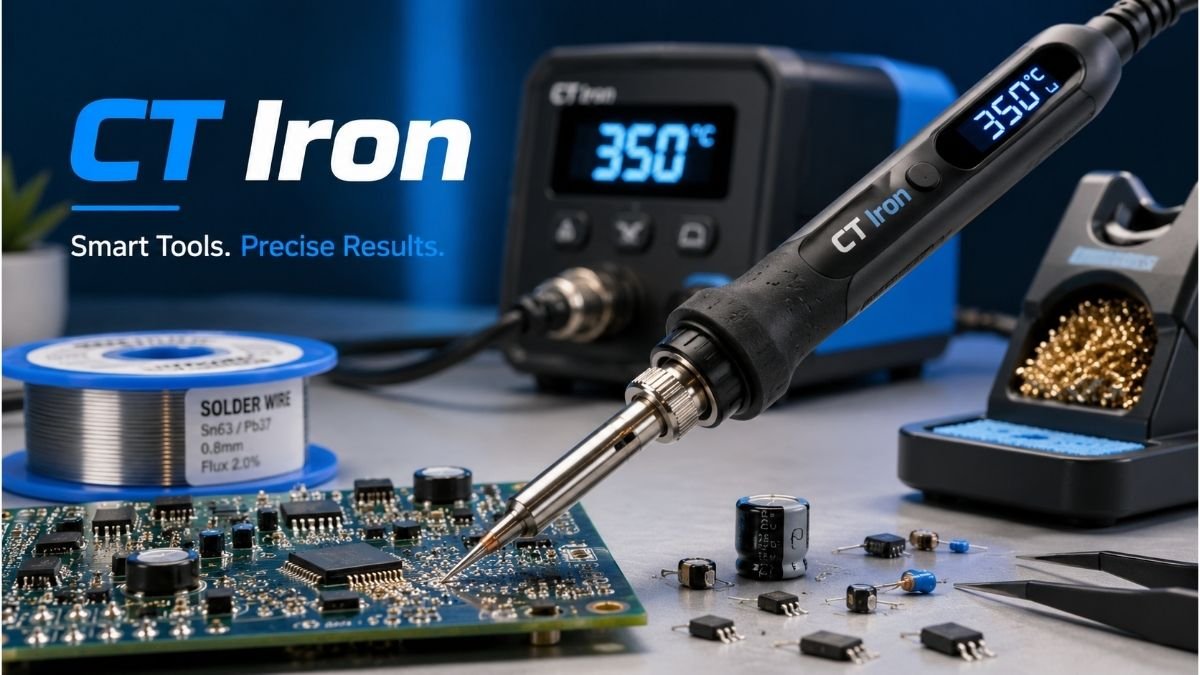
The term CT iron can appear confusing at first because it is used in more than one context. For people working with electronics, repairs, circuit boards, and DIY projects, it commonly refers to a CT soldering iron. This handheld electrical tool heats solder so you can join electronic components and wires. CT-branded soldering irons come in various power ratings, including the common 30-watt and 60-watt versions, making them suitable for a range of repair and assembly work.
Understanding a soldering iron involves more than knowing it gets hot. Wattage, tip condition, heating performance, solder type, component size, and the user’s technique can all affect the quality of a soldered connection. A soldering iron suitable for a small printed circuit board may not be the best option for larger wires or metal connections that require more heat. At the same time, excessive heat can damage delicate electronic components. Choosing and using the tool correctly matters for beginners and experienced technicians alike.
What Is a CT Iron?
In electronics, a CT iron is a soldering iron associated with CT-branded soldering equipment. It is normally shaped like a pen, with an insulated handle at one end and a heated metal tip at the other. When connected to an appropriate electrical supply, the internal heating element raises the tip temperature. The heated tip then transfers enough heat to a connection so the solder melts and flows around the parts being joined.
Soldering should not be confused with welding. Welding generally melts or fuses the base materials, while electronics soldering typically uses a separate solder alloy to form an electrical and mechanical connection between components. This difference matters when working on printed circuit boards because electronic components can be sensitive to excessive heat.
A CT iron can handle tasks from basic wire repair to component replacement. However, different CT models have different specifications, so users should always check the model number, power rating, voltage requirements, tip compatibility, and operating instructions rather than assuming every CT soldering iron behaves the same way.
How Does a CT Iron Work?
The basic operating principle of a CT iron is straightforward. Electrical energy passes through an internal heating element, which converts that energy into heat. Heat travels toward the metal soldering tip, allowing it to reach a temperature high enough to melt solder. The user then brings the heated tip into contact with the work area, typically heating both the component lead and the soldering pad or wire connection before applying solder.
Good soldering technique relies on heat transfer rather than simply pressing solder directly against the tip. The connection itself should reach the correct temperature so that solder can flow properly over the metal surfaces. When done correctly, the finished joint should be mechanically secure and electrically conductive.
The soldering tip’s condition also matters. A heavily oxidized, dirty, or damaged tip may transfer heat inefficiently. Technicians therefore commonly keep the tip clean and properly tinned, maintaining a thin coating of solder on its working surface. Proper tip maintenance improves heat transfer and extends the tip’s useful life.
CT Iron Power Ratings and What They Mean
One of the most important specifications when choosing a CT iron is its wattage. CT soldering irons are sold in different power configurations, with 30W and 60W models available. Wattage should not be interpreted simply as the temperature of the iron. Instead, it largely indicates the tool’s ability to produce and recover heat under working conditions.
30W CT Iron
A 30-watt soldering iron is generally associated with lighter electronics work. It can be useful for small components, thin wires, hobby projects, basic circuit-board work, and repairs that don’t require large amounts of heat. Lower-powered irons can sometimes work for delicate tasks, though performance depends largely on the iron’s design and the thermal requirements of the connection.
A 30W tool is not automatically safer for every electronic component. Even a low-powered hot tip held against a sensitive component for too long can still cause damage. Technique, timing, and correct tip selection therefore remain important.
60W CT Iron
A 60-watt CT iron provides greater heating capability and may suit connections that draw heat away from the soldering tip quickly. Larger wires, connectors, terminals, and certain repair jobs can require additional thermal capacity. A more powerful iron may also recover working heat more quickly when it contacts a larger metal surface.
Greater power does not mean the user should apply maximum heat continuously. Excessive heat can lift circuit-board pads, damage insulation, overheat components, or shorten tip life. For precision electronics, temperature control is often more important than simply selecting the highest available wattage.
Common Uses of CT Iron in Electronics
The CT iron can serve many purposes in an electronics workspace. One of its most common applications is joining wires, where solder creates a reliable electrical connection after the conductors have been properly prepared. It can also be used to install or replace through-hole components such as resistors, capacitors, switches, connectors, and other parts on compatible circuit boards.
Repair technicians may use a soldering iron to replace broken connections, repair loose wires, service small electronic devices, or restore mechanically damaged solder joints. Hobbyists also use soldering irons for Arduino-style projects, educational electronics, model building, small electrical projects, and prototype circuits.
However, not every modern electronics repair can be handled effectively with a simple pencil-style soldering iron. Very small surface-mount components, densely populated boards, specialized packages, and advanced rework jobs can require temperature-controlled stations, hot-air equipment, magnification, specialized tips, or professional repair experience. Recognizing the tool’s limitations is an important part of using it responsibly.
Choosing the Right CT Iron
Start by matching the iron to the work you expect to do. If the main purpose is occasional small electronics repair, a lower-powered model may be sufficient. If your work regularly involves larger connectors, heavier wires, or joints with greater thermal mass, additional power can help.
Tip availability is another important consideration. A fine tip can provide better access to small soldering points, while a wider chisel-shaped tip often transfers heat more effectively to larger connections. The best tip is not necessarily the smallest; it is the one that transfers heat efficiently while matching the joint’s size and shape.
Users should also check voltage compatibility before purchasing or plugging in any soldering iron. Electrical standards differ by region, and operate equipment only according to its rated supply requirements. Other useful considerations include handle comfort, cable quality, availability of replacement tips, temperature control, stand compatibility, and how easy it is to get spare parts.
How to Use a CT Iron More Effectively
Successful soldering begins with preparation. Keep the work surface stable, well lit, and heat-resistant. Clean components and wires before soldering because dirt, corrosion, or oxidation can interfere with solder flow. Keep a secure soldering-iron stand nearby so the hot tool is never placed directly on an ordinary table or near combustible materials.
Once the iron has reached its operating temperature, the tip should be clean and lightly tinned. Bring the tip into contact with the connection so both surfaces receive heat. Then introduce solder to the heated joint rather than piling it onto the tip. After enough solder has flowed, remove the solder first, then the iron. Keep the joint still while the solder cools.
Too much solder can create bridges between neighboring electrical points, while too little can result in a weak or unreliable connection. Good results depend on controlled heat, clean surfaces, proper solder flow, and careful inspection, not simply using more solder.
CT Iron Maintenance and Tip Care
Regular maintenance can make a noticeable difference in soldering performance. The tip of a CT iron is particularly important because it transfers heat into the joint. Oxidation at the tip can reduce heat transfer and make soldering increasingly difficult.
Clean the working surface with an appropriate soldering-tip cleaning method, and leave the tip with a protective coating of solder rather than storing it completely dry and oxidized. Use abrasive cleaning methods cautiously, as aggressive scraping can damage protective plating on certain tips.
Also examine the power cable, plug, handle, and insulation periodically. Do not use a soldering iron with damaged electrical insulation, exposed conductors, a loose connection, or a visibly defective heating assembly until it has been properly repaired or replaced.
Important CT Iron Safety Considerations
A CT iron operates at temperatures that can cause serious burns, so safe handling is essential. Never touch the heated metal section, even briefly, and always return the tool to a proper stand when it is not in use. Children and inexperienced users should not handle soldering equipment without appropriate supervision.
Ventilation also deserves attention. Soldering can generate fumes, especially from flux, and users should avoid positioning their face directly above the work. For frequent soldering, an appropriately ventilated workspace or suitable fume-management arrangement is preferable.
Electrical safety is equally important. The soldering iron should match the available supply voltage and should not be operated with a damaged cable or plug. After finishing the work, disconnect the tool when appropriate and let it cool in a safe location before storage.
Does CT Iron Have a Medical Meaning?
The phrase ” CT iron” can also appear in medical discussions, but its meaning is completely different from that of a soldering iron. In medicine, CT stands for computed tomography, an imaging technology that uses X-rays and computer processing to create detailed images of structures inside the body.
Researchers have studied specialized CT techniques to evaluate or quantify iron accumulation, particularly when excessive iron is deposited in organs. Iron overload can occur in certain inherited conditions or following repeated blood transfusions. However, ordinary searches for “ct iron” should not be interpreted as a diagnosis, test recommendation, or medical result.
Medical assessment of suspected iron overload may involve blood tests and specialized imaging, depending on the patient’s circumstances. Anyone searching for ct iron because of a medical concern should rely on a qualified healthcare professional rather than information about electronics products or general internet descriptions.
Why Search Intent Matters for CT Iron
The ambiguity surrounding ct iron explains why context matters so much. Someone searching from an electronics workshop may be looking for a CT soldering iron, replacement tips, wattage information, or guidance about repair work. Another person encountering the phrase in a healthcare document may instead be dealing with computed tomography and iron measurements.
Users should therefore look at surrounding terms. Words such as 30W, 60W, soldering, electronics, circuit board, tip, repair, or solder strongly indicate the tool-related meaning. Terms such as liver, scan, imaging, iron overload, CT examination, or medical diagnosis point toward the healthcare meaning.
Understanding this distinction prevents misleading comparisons and makes it easier to find relevant information.
Conclusion
CT iron most commonly refers to a CT soldering iron when the surrounding topic involves electronics, circuit boards, wiring, repairs, or DIY projects. These tools use an electrically heated tip to melt solder and form conductive connections, with different power ratings suited to different types of work. Options such as 30W and 60W CT soldering irons show why users should choose a power level based on the size and thermal demands of their projects rather than assuming higher wattage is always better.
Good results depend on more than the tool itself. Correct tip selection, clean surfaces, careful heat control, proper soldering technique, regular maintenance, and safe handling are all essential. At the same time, readers should remember that CT iron can mean something completely different in medical imaging, where CT may be discussed in relation to detecting or measuring iron accumulation. Identifying the context first is therefore the most important step in understanding exactly what the term means.
FAQs
What is a CT Iron?
A CT Iron usually refers to a CT-brand soldering iron used for electronics repair, circuit-board work, wire connections, and DIY projects.
What is a CT Iron used for?
A CT Iron is commonly used for soldering wires, repairing circuit boards, replacing electronic components, fixing connectors, and hobby electronics projects.
Is a 30W or 60W CT Iron better?
A 30W CT Iron is generally suitable for lighter electronics work, while a 60W model may be better for larger wires, connectors, and joints that require more heat.
How do you maintain a CT Iron?
Keep the soldering tip clean and properly tinned, use a suitable stand, prevent excessive oxidation, and regularly check the cable and plug for damage.
Is CT Iron safe to use?
Yes, when handled properly. The tip becomes extremely hot, so always use a heat-resistant stand, proper ventilation, and suitable safety precautions while soldering.

Philip Tindall: The Remarkable Life of Mike Tindall’s Father and Former Rugby Captain

Finn Sinclair: Amazing Facts About Olivia Colman’s Son and His Private Life

Maureen E. McPhilmy: The Difficult Divorce from Bill O’Reilly and Her Life Beyond the Headlines

Jessica de Rothschild: The Remarkable Career, Family and Philanthropy of Sacha Gervasi’s Wife

Caroline Friend: The Opera Singer and Audiobook Director Behind Rosamund Pike’s Success

Ted Beckham: The Remarkable Story of David Beckham’s Father

Charlie Comer: Amazing Facts About Jodie Comer’s Brother and His Football Career

Louis Thomas Hardy: Essential Facts About Tom Hardy’s Eldest Son

Elizabeth Anne Hardy: Fascinating Facts About Tom Hardy’s Mother and Her Artistic Life

Cyndy Powell: The Inspiring Story of Glen Powell’s Mother and Her Hollywood Cameos

Mary Joan Hansen: What Is Known About Chris Hansen’s Former Wife

Debbie Paphitis: The Enduring Marriage and Private Life of Theo Paphitis’ Wife

Sam Handel: The Filmmaker, Photographer and Lauren Ambrose’s Husband

Judith Hurst: Who Is Geoff Hurst’s Wife and What Is Known About Their Life Together?

Sophie Redgrave: Who Is Sir Steve Redgrave’s Daughter and What Is Known About Her?

Nerwey Explained: The Truth Behind the Emerging Online Name and Its Digital Identity

Adele Georgiana Gianopoulos: Facts About Molly Ringwald’s Daughter

Eulala Scheel: Marcia Gay Harden’s Child, Acting Credits and Creative Career

Londa Butler: What Is Publicly Known About Jimmy Butler’s Mother

Michael Galeotti: Enation Musician and Bethany Joy Lenz’s Ex-Husband
Philip Tindall: The Remarkable Life of Mike Tindall’s Father and Former Rugby Captain
Finn Sinclair: Amazing Facts About Olivia Colman’s Son and His Private Life
Maureen E. McPhilmy: The Difficult Divorce from Bill O’Reilly and Her Life Beyond the Headlines
Jessica de Rothschild: The Remarkable Career, Family and Philanthropy of Sacha Gervasi’s Wife
Caroline Friend: The Opera Singer and Audiobook Director Behind Rosamund Pike’s Success
Ted Beckham: The Remarkable Story of David Beckham’s Father
Charlie Comer: Amazing Facts About Jodie Comer’s Brother and His Football Career
Louis Thomas Hardy: Essential Facts About Tom Hardy’s Eldest Son
Elizabeth Anne Hardy: Fascinating Facts About Tom Hardy’s Mother and Her Artistic Life
Cyndy Powell: The Inspiring Story of Glen Powell’s Mother and Her Hollywood Cameos
-

 Celebrity3 months ago
Tina Raver: Inspiring Facts About Kim Raver’s Supportive Mother
-

 Celebrity2 months ago
Heita Nayyar: Inspiring Family Story Behind Kunal Nayyar’s Mother
-

 Celebrity3 months ago
Tanya Flynn: The Fascinating Story of Sean Maguire’s Wife and Former Police Detective
-

 Celebrity2 months ago
Graham Rooney: The Fascinating Story of Wayne Rooney’s Younger Brother