
Technology
Bilieter Explained: The Clear Truth About Its Meaning, Uses, and Modern Relevance

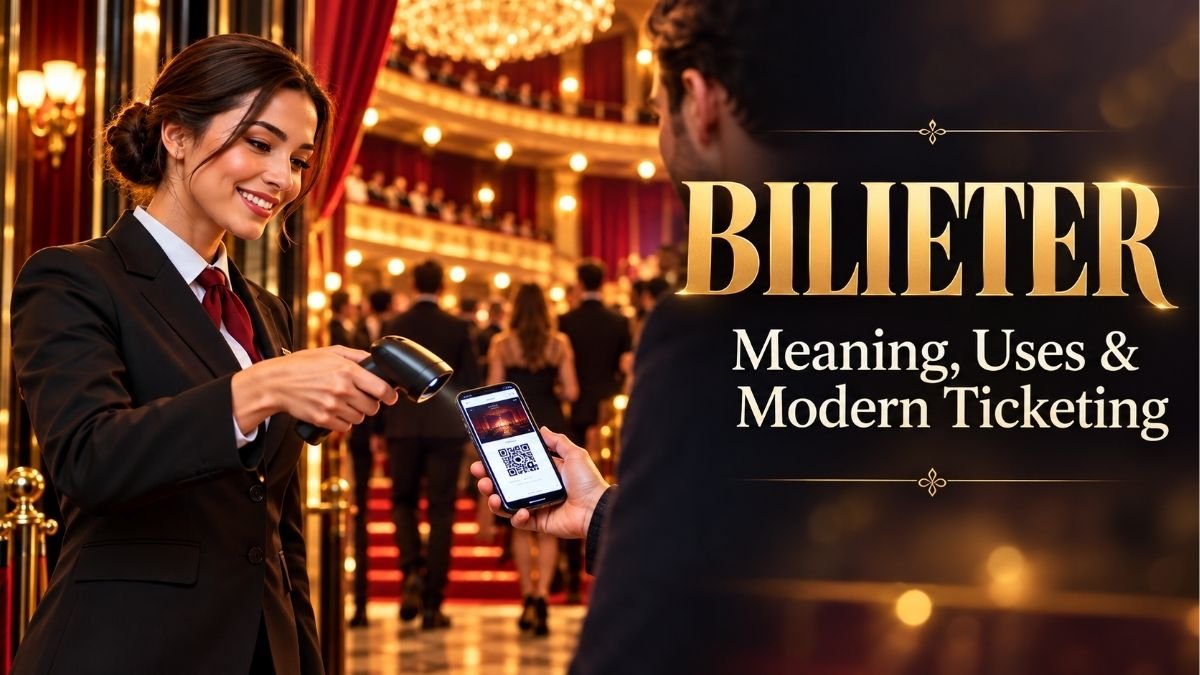
The word bilieter can immediately raise questions because it does not look like a familiar everyday English term. Someone encountering it for the first time may wonder whether it describes a profession, a ticketing service, a technology platform, a brand, or simply an unusual spelling. That uncertainty is understandable. Unlike widely established English words, bilieter has no universally recognized definition that you can apply confidently in every situation. Its meaning depends heavily on context, especially because closely related spellings are connected with ticket checking, venue assistance, admission control, and older meanings involving written tickets or documents.
One useful clue comes from the Polish word bileter, translated into English as a collector or usher, including someone who helps visitors at a theatre. This connection helps explain why bilieter is often interpreted in a ticketing and admission context. However, treat the spelling carefully. It is safer to treat bilieter as an uncommon variation or digital search term rather than a formally standardized English job title.
This article explains bilieter, its possible meaning, its relationship with similar words, how ticket-related roles work, and why such an unusual term can become increasingly visible in the digital age.
What Does Bilieter Mean?
In practical terms, bilieter refers to a person or role involved in checking, handling, collecting, or managing tickets. Think about entering a theatre, cinema, concert hall, festival, exhibition, or other controlled venue. Before visitors enter certain areas, someone may confirm their ticket, scan a digital pass, give directions, answer basic admission questions, or guide them to the correct entrance. These responsibilities closely resemble the work associated with the Polish term bileter, meaning an usher or collector.
The important distinction is that bilieter itself should not automatically be presented as a standard English dictionary term. Online language develops differently from formal dictionary language. Search terms can emerge from spelling variations, transliterations, brand names, foreign-language words, usernames, domain names, and repeated online usage. As a result, a term can become searchable and recognizable in a particular context without an official definition.
For readers, the best approach is therefore to examine the surrounding information. If bilieter appears beside words such as tickets, admission, theatre, events, check-in, entry, venue, booking, or passengers, a ticket-related interpretation is reasonable. If it appears as the name of a website, product, project, or account, it may function as a proper name instead.
Bilieter, Bileter, and Similar Words
Much of the confusion surrounding bilieter comes from similar-looking words. Bileter is an established Polish word associated with ticket collection and ushering. Bilieter adds an extra letter and is not equally established in standard English usage. Another similar word is billet, which has a much longer linguistic history and several meanings involving written notes, documents, accommodation assignments, and other forms of written authorization.
Historical dictionary evidence shows that the French word billet developed from earlier forms referring to a short written message, letter, or notice. Its history therefore demonstrates how words connected with written slips, passes, notices, and documents have developed different meanings across languages and periods.
This does not mean that every similar-looking word has the same origin or meaning. Bilieter, bileter, billet, and billeter should not simply be treated as interchangeable words. Similar spelling can provide useful linguistic clues, but context remains essential.
For modern readers, the easiest distinction is practical. Bileter has documented use as a ticket collector or usher, while bilieter is better considered an uncommon variation whose intended meaning must be determined from the page, conversation, business, or digital setting where it appears.
The Traditional Role Associated With Bilieter
If bilieter is being used in the ticket-handling sense, the role is far more important than simply looking at a piece of paper. Admission staff often create the first direct interaction between an organisation and its visitors. Their work may involve confirming that guests have appropriate access, guiding them through entrances, helping people locate seats or designated areas, explaining basic venue rules, and directing unusual situations to supervisors or customer-service teams.
At a theatre, for example, an usher or ticket attendant might check admission before helping visitors locate the appropriate section. At a festival, staff may inspect wristbands or electronic tickets. At conferences and exhibitions, employees can help confirm registrations and direct attendees towards specific halls. Transport systems may use staff to confirm that passengers hold valid travel documents.
Exact responsibilities naturally vary between organizations. A person responsible for ticket validation at a stadium will not necessarily perform the same duties as an employee working at a cinema or railway station. Nevertheless, the central concept remains similar: controlling and assisting legitimate access while helping the visitor experience run smoothly.
How Digital Ticketing Has Changed the Bilieter Concept
Ticketing has changed dramatically as smartphones, online bookings, electronic passes, and QR-based admission have become common. A ticket no longer has to be a physical slip printed at a box office. Customers may buy admission online, receive digital confirmation, store it on a mobile device, and present a code for scanning when they arrive.
This transformation changes the practical work of ticket-handling staff. Instead of simply tearing or collecting printed tickets, modern admission teams may operate scanning devices, help visitors locate digital passes, check booking information, manage different entrance categories, and respond when a ticket cannot be validated immediately.
Technology can speed entry, but it does not remove the need for human assistance. Phones lose power, visitors open the wrong confirmation email, screens can be hard to scan, customers may approach the wrong gate, and booking information sometimes needs clarification. Human staff therefore remain valuable because ticketing is both a technology process and a customer-service experience.
From this perspective, the concept of bilieter has evolved alongside the wider shift from traditional paper admission to modern digital entry systems.
Why Ticket Validation Matters
Ticket validation provides more than simple proof of payment. It helps organizations control capacity, organize visitor flow, separate ticket categories, reduce confusion at entrances, and maintain orderly access to restricted spaces.
Consider a large event with several thousand attendees. Without organised admission procedures, entrances could quickly become congested. Different groups may have different access rights, arrival times, seating areas, or ticket categories. Effective entry management helps organisers move people through these stages in a structured way.
The human element matters most when something unexpected happens. Automated systems can confirm whether a code matches a record, but a trained employee can explain what has happened and direct a visitor towards an appropriate solution. Good admission management therefore depends on a balance between technology, organisation, communication, and customer support.
Why the Word Bilieter Appears Online
The internet constantly produces unusual search terms. Some originate from other languages, while others come from typing variations, newly created brands, usernames, product names, domain names, or repeated spelling patterns. Once multiple pages begin using a particular expression, search engines may start displaying information about it even when the word has not become part of standard English vocabulary.
Bilieter is a useful example of why readers should distinguish between search visibility and established meaning. Finding many pages containing a word does not automatically prove that every explanation attached to it is accurate. Online articles sometimes repeat earlier claims without checking whether they originated from a reliable dictionary, official organisation, or identifiable product.
For that reason, readers should be especially careful when websites describe bilieter as a specific company, artificial-intelligence system, financial service, medical concept, software platform, or other specialized product without clear evidence. An unfamiliar keyword invites speculation, but responsible information should separate what is verified from what is assumed.
Understanding Bilieter Through Context
Context is the safest way to interpret bilieter. A single unfamiliar word may have several possible uses, but the surrounding sentence usually provides important clues.
If someone says that a bilieter checked visitors before they entered an auditorium, the meaning probably relates to ticket checking or ushering. If the word appears prominently as a website name or company heading, it may function simply as a brand. If it appears in translated material, it may reflect a spelling or transliteration choice. If it is used without explanation in an online article, readers should avoid assuming that every detailed claim about it has been verified.
This approach is useful far beyond bilieter. Digital publishing has made it increasingly common for people to encounter obscure names and unfamiliar terminology. Checking context, comparing spellings, and distinguishing confirmed information from interpretation can prevent misinformation from spreading.
Bilieter and the Modern Visitor Experience
Although the word itself is unusual, the role most commonly associated with it is familiar. Almost anyone who has attended a cinema, theatre performance, sporting event, concert, conference, festival, museum exhibition, or ticketed attraction has interacted with some form of admission staff.
These employees can influence how smoothly a visitor’s experience begins. Clear instructions, efficient checking, helpful directions, and professional communication make large events easier to navigate. Poorly organized entry, by contrast, can create queues and confusion before the main experience even begins.
Digital systems can improve efficiency, but the underlying goal has remained remarkably consistent: verify appropriate access and help people reach the right place. Whether the ticket is printed on paper or displayed on a smartphone, organized admission remains essential to many public events.
Is Bilieter a Profession or a Technology?
There is no universal answer because bilieter is not sufficiently standardized to support a single fixed English definition. In ticket-related usage, it can reasonably be understood through its connection with ticket attendants and ushers. In another context, Bilieter might simply be chosen as a name for a website, account, project, or brand.
Avoid turning uncertainty into invented certainty. Unless an identifiable organization describes a product or service called Bilieter, readers should not assume the word refers to a particular app, AI platform, software package, or commercial ticketing company.
The clearest general interpretation remains its association with tickets, admission, and visitor entry, though the exact meaning depends on context.
FAQs
What is bilieter?
Bilieter is an uncommon term frequently interpreted in connection with ticket handling, admission, or ushering. It should not be treated as a universally standard English word, so its exact meaning depends on where and how it is being used.
Is bilieter the same as bileter?
They are similar but should not automatically be described as identical spellings. Bileter is a documented Polish word translated into English as a collector or usher. Bilieter appears to be an uncommon variation, often used in a similar ticket-related context.
What does a bilieter do?
In the ticketing sense, it can refer to work such as checking tickets, helping visitors enter a venue, giving directions, assisting with seating, or supporting admission procedures. Exact duties depend on the organisation and venue.
Can bilieter refer to digital ticketing?
The concept can be discussed alongside digital ticketing because modern ticket attendants frequently work with electronic tickets, mobile passes, scanning systems, and digital check-in. However, bilieter should not automatically be described as the name of a specific digital platform unless that claim can be independently verified.
Where might a bilieter work?
A ticket-handling professional may work in cinemas, theatres, concert venues, stadiums, festivals, exhibitions, conferences, attractions, or transport facilities. Different organisations may use titles such as usher, ticket collector, admission attendant, ticket inspector, or entry staff instead.
Conclusion
Bilieter is a good example of how an unfamiliar online term can become confusing when it carries different meanings. Rather than treating it as a clearly established English word, the most reliable approach is to understand it through context. Its strongest documented linguistic link is to bileter, a Polish term for collectors and ushers, which helps explain the widespread association with tickets, admission, and venue entry.
The broader idea remains easy to understand. Ticket-handling staff help verify access, guide visitors, support orderly entry, and increasingly work alongside digital ticketing technology. Paper tickets may be disappearing from some environments, but organised admission and human customer support continue to play important roles.
Most importantly, unfamiliar terminology should never be used as an excuse to invent facts. When encountering bilieter online, readers should check the surrounding context, distinguish established language from unusual spelling, and look for reliable evidence before accepting claims about a particular company, technology, or service.

Philip Tindall: The Remarkable Life of Mike Tindall’s Father and Former Rugby Captain

Finn Sinclair: Amazing Facts About Olivia Colman’s Son and His Private Life

Maureen E. McPhilmy: The Difficult Divorce from Bill O’Reilly and Her Life Beyond the Headlines

Jessica de Rothschild: The Remarkable Career, Family and Philanthropy of Sacha Gervasi’s Wife

Caroline Friend: The Opera Singer and Audiobook Director Behind Rosamund Pike’s Success

Ted Beckham: The Remarkable Story of David Beckham’s Father

Charlie Comer: Amazing Facts About Jodie Comer’s Brother and His Football Career

Louis Thomas Hardy: Essential Facts About Tom Hardy’s Eldest Son

Elizabeth Anne Hardy: Fascinating Facts About Tom Hardy’s Mother and Her Artistic Life

Cyndy Powell: The Inspiring Story of Glen Powell’s Mother and Her Hollywood Cameos

Mary Joan Hansen: What Is Known About Chris Hansen’s Former Wife

Debbie Paphitis: The Enduring Marriage and Private Life of Theo Paphitis’ Wife

Sam Handel: The Filmmaker, Photographer and Lauren Ambrose’s Husband

Judith Hurst: Who Is Geoff Hurst’s Wife and What Is Known About Their Life Together?

Sophie Redgrave: Who Is Sir Steve Redgrave’s Daughter and What Is Known About Her?

Nerwey Explained: The Truth Behind the Emerging Online Name and Its Digital Identity

Adele Georgiana Gianopoulos: Facts About Molly Ringwald’s Daughter

Eulala Scheel: Marcia Gay Harden’s Child, Acting Credits and Creative Career

Myreadibgmsngs: The Mysterious Search Term Explained, Its Meaning, Origins, and Online Safety

Londa Butler: What Is Publicly Known About Jimmy Butler’s Mother
Philip Tindall: The Remarkable Life of Mike Tindall’s Father and Former Rugby Captain
Finn Sinclair: Amazing Facts About Olivia Colman’s Son and His Private Life
Maureen E. McPhilmy: The Difficult Divorce from Bill O’Reilly and Her Life Beyond the Headlines
Jessica de Rothschild: The Remarkable Career, Family and Philanthropy of Sacha Gervasi’s Wife
Caroline Friend: The Opera Singer and Audiobook Director Behind Rosamund Pike’s Success
Ted Beckham: The Remarkable Story of David Beckham’s Father
Charlie Comer: Amazing Facts About Jodie Comer’s Brother and His Football Career
Louis Thomas Hardy: Essential Facts About Tom Hardy’s Eldest Son
Elizabeth Anne Hardy: Fascinating Facts About Tom Hardy’s Mother and Her Artistic Life
Cyndy Powell: The Inspiring Story of Glen Powell’s Mother and Her Hollywood Cameos
-

 Celebrity3 months ago
Tina Raver: Inspiring Facts About Kim Raver’s Supportive Mother
-

 Celebrity2 months ago
Heita Nayyar: Inspiring Family Story Behind Kunal Nayyar’s Mother
-

 Celebrity3 months ago
Tanya Flynn: The Fascinating Story of Sean Maguire’s Wife and Former Police Detective
-

 Celebrity2 months ago
Graham Rooney: The Fascinating Story of Wayne Rooney’s Younger Brother