Health
Fraboc Explained: The Ultimate Guide to Its Medical Meaning, Purpose, and Modern Relevance

What Is Fraboc?
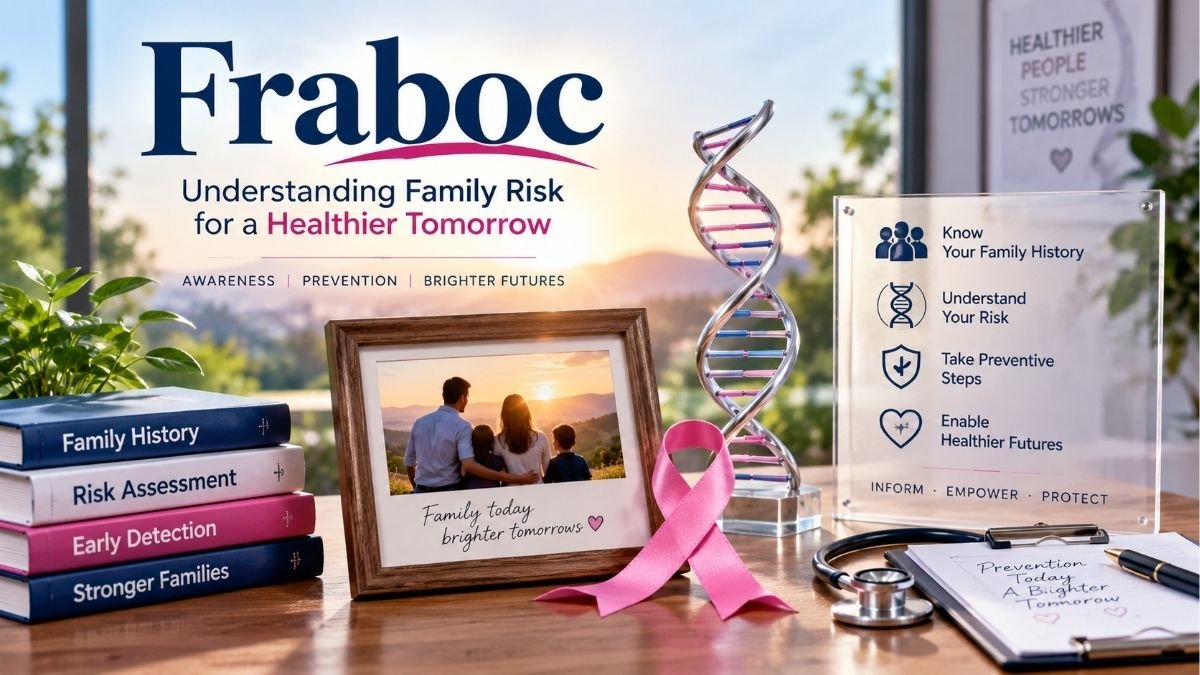
Fraboc can be confusing when you encounter it in older healthcare documents, online discussions, search results, or recent articles. Its strongest documented meaning comes from FRA-BOC, an abbreviation for Familial Risk Assessment – Breast and Ovarian Cancer. FRA-BOC was an Australian clinical assessment tool created to help healthcare professionals evaluate a person’s potential breast and ovarian cancer risk based primarily on family history. It should not be confused with a disease, cancer diagnosis, medication, genetic mutation, or laboratory test. Instead, it belongs to the broader field of familial cancer risk assessment, where doctors consider patterns of cancer within a family to decide whether additional evaluation or specialist advice may be appropriate.
Interest in Fraboc continues because the name still appears in older healthcare material and increasingly appears across the internet with several different interpretations. Some modern websites describe Fraboc as a business framework, digital methodology, productivity concept, or adaptable decision-making system. Treat those broader descriptions carefully because they don’t have the same established history as the medical term FRA-BOC. Understanding this distinction is essential for anyone researching the keyword because the context in which the word appears can dramatically change what it means.
What Does FRA-BOC Stand For?
The medical meaning of FRA-BOC is Familial Risk Assessment – Breast and Ovarian Cancer. The name clearly explains the purpose of the original system. “Familial Risk Assessment” refers to evaluating whether patterns of illness among relatives suggest a greater-than-average risk, while “Breast and Ovarian Cancer” identifies the cancers the assessment focused on.
The system was intended primarily for healthcare professionals, including general practitioners and nurses. Rather than independently predicting whether an individual would develop cancer, it helped clinicians organize important information about a patient’s family cancer history. That information could then contribute to a broader clinical discussion about risk, screening, referral, genetic counseling, or other appropriate steps. This distinction is important because risk assessment is fundamentally different from diagnosis. A person classified as having an increased familial risk does not automatically have cancer, and an assessment alone cannot prove that a disease will develop in the future.
Why Was Fraboc Created?
Family history can provide valuable clues when healthcare professionals assess the possibility of inherited susceptibility to certain cancers. Cancer can occur in almost any family without necessarily indicating an inherited genetic condition. However, particular patterns may deserve closer attention, especially when several biologically related family members have experienced the same or related cancers or when cancer develops unusually early.
Fraboc gave clinicians a structured way to consider these patterns, rather than evaluating family history casually or inconsistently. Doctors could examine which relatives had developed breast or ovarian cancer, how closely those relatives were related to the patient, their ages when diagnosed, whether cancers appeared repeatedly on the same side of the family, and whether other features suggested that specialist investigation might be useful. By organizing family-history information into a more systematic assessment, FRA-BOC helped healthcare professionals decide whether routine management was appropriate or whether a more detailed familial cancer assessment was needed.
How Did Fraboc Assess Family Cancer History?
A central principle behind FRA-BOC was that not every family history carries the same significance. Having one older relative who developed breast cancer may create a very different risk picture from having several close relatives diagnosed at young ages. Therefore, the assessment looked at patterns instead of relying on a simple yes-or-no question about whether cancer existed in the family.
Healthcare professionals generally need details such as the type of cancer, the relative’s relationship to the patient, age at diagnosis, whether more than one cancer occurred in a person, and whether similar cancers appeared among several relatives. Information from both maternal and paternal sides of a family can matter. The purpose of gathering these details is not to create fear but to build a more accurate picture of inherited and familial risk.
This approach remains important even though the original Fraboc tool itself is no longer available. Modern cancer risk assessment continues to recognize that a detailed and accurate family history can provide information that a vague statement such as “cancer runs in my family” cannot.
Fraboc Was a Risk Tool, Not a Cancer Test
One of the most important facts to understand about Fraboc is what it could not do. FRA-BOC could not diagnose breast cancer or ovarian cancer. It did not examine tissue, detect tumors, perform genetic sequencing, or guarantee whether a person would eventually develop cancer. Its purpose was risk assessment, which involves weighing known factors and deciding what level of further attention may be appropriate.
This matters because people often misunderstand medical risk. Increased risk does not mean certainty, and average risk does not mean zero risk. Cancer development can involve complex interactions among age, genetics, family history, hormonal influences, lifestyle, reproductive factors, environmental exposure, and other biological factors. No historical risk calculator should therefore be interpreted as a personal medical verdict.
The Connection Between Fraboc and Genetic Risk
The relationship between Fraboc and genetics is another reason people continue searching for the term. Certain inherited genetic variants can significantly increase susceptibility to breast, ovarian, and related cancers. Well-known examples include pathogenic variants involving BRCA1 and BRCA2, although hereditary cancer genetics extends beyond these two genes.
A family-history assessment can sometimes identify patterns that warrant discussion with specialists in genetic medicine or familial cancer services. However, FRA-BOC itself was not a genetic test. It can help identify situations where more detailed evaluation might be useful, but confirming an inherited genetic variant requires appropriate professional assessment and, when indicated, specialized genetic testing.
This separation between family-history assessment and genetic testing remains essential. Family history can raise questions, genetic counseling can help interpret those questions, and genetic testing may sometimes provide additional information. They are related processes, but they are not interchangeable.
Is Fraboc Still Used Today?
Cancer Australia no longer offers the original FRA-BOC tool. This matters for anyone who encounters older articles instructing readers or clinicians to use the original assessment. Healthcare guidance changes as research develops, clinical practices improve, and more sophisticated risk models become available.
Modern Australian breast-cancer risk assessment may instead involve newer resources such as iPrevent, alongside clinical evaluation and other professional guidance. These newer approaches can consider a wider collection of information and support more individualized discussions about cancer prevention and screening.
Therefore, anyone encountering Fraboc today should generally view it as a historical clinical risk-assessment resource, rather than assuming that the original tool remains the current standard.
Fraboc and iPrevent: Understanding the Difference
While Fraboc focused strongly on familial patterns of breast and ovarian cancer, modern approaches aim to provide a more comprehensive understanding of an individual’s risk profile. iPrevent is associated with contemporary breast-cancer risk assessment in Australia and can help support discussions between patients and healthcare professionals.
The evolution from older tools such as FRA-BOC toward newer risk-assessment systems illustrates an important principle of medicine: clinical tools are not permanent simply because they were useful at one time. Risk models are refined when stronger evidence, improved datasets, better algorithms, and more personalized approaches become available.
If you’re researching Fraboc because it appears in an older clinical document, the information may still provide useful historical context. Still, a current healthcare professional should interpret present-day risk using contemporary evidence and guidance.
Why Fraboc Is Appearing in Modern Online Discussions
Interestingly, Fraboc has recently appeared outside its original healthcare context. Some online articles describe it as a flexible framework for digital transformation, workflow management, productivity, innovation, or structured decision-making. These interpretations tend to present Fraboc as a broad concept built around adaptability, organization, problem-solving, and continuous improvement.
Readers should distinguish those claims from the documented FRA-BOC medical history. The medical abbreviation has an identifiable institutional background and defined purpose. The newer business and technology descriptions appear considerably less standardized, with different publishers offering different explanations of what Fraboc supposedly represents.
This does not mean a company, community, creator, or future project could never use the name Fraboc in another context. New words and brand identities emerge constantly. It simply means readers should avoid assuming that every modern definition belongs to one established framework. When you encounter the word online, the surrounding context and the source’s credibility should determine how you interpret it.
Why Accurate Family History Still Matters
Although the original Fraboc assessment has been retired, one of its principles remains highly relevant: accurate family medical history can help healthcare professionals make better-informed decisions. People often know that a relative “had cancer” without knowing what type, at what age, or whether there were related diagnoses elsewhere in the family. Those details can materially affect how clinicians interpret familial patterns.
Where possible, knowing which relatives were diagnosed, the specific cancer involved, their approximate age at diagnosis, and which side of the family they belong to can make discussions with healthcare professionals more productive. Patients should not try to calculate their own cancer risk solely from family anecdotes or online tools, particularly because family structures, genetic inheritance, and cancer biology can be complicated.
The most useful role of family-history knowledge is to improve conversations with qualified healthcare professionals, not to create a self-diagnosis.
Common Misunderstandings About Fraboc
Several misconceptions have developed around the keyword. Fraboc is not a cancer, it is not the name of a breast-cancer subtype, and it does not describe an ovarian disease. The historical FRA-BOC system was also not a genetic test and did not tell someone with certainty whether cancer would develop.
Another misunderstanding comes from newer online explanations that treat Fraboc as a universally recognized technology or business framework. While the term may certainly be used creatively in those environments, readers should understand that these modern interpretations are not equivalent to the documented healthcare meaning of Familial Risk Assessment – Breast and Ovarian Cancer.
Making this distinction helps prevent misinformation and gives searchers a much clearer answer to the fundamental question: What is Fraboc?
The Continuing Relevance of Fraboc
The history of Fraboc provides an interesting example of how medical decision-support tools evolve. FRA-BOC represented an effort to bring structure to an important clinical question: when does a person’s family history of breast or ovarian cancer deserve additional investigation? Although technology and medical guidance have advanced, that underlying question remains important.
Today’s tools can incorporate more sophisticated evidence and provide increasingly individualized estimates, but good clinical assessment still begins with accurate information. Family history, personal health factors, professional interpretation, and appropriate screening guidance all contribute to responsible cancer-risk management.
For people researching Fraboc today, the most important lesson is therefore not simply that an old calculator existed. It is that risk assessment evolves, and medical decisions should rely on current evidence rather than outdated online information.
Conclusion
Fraboc, more formally known as FRA-BOC, has a clear and documented history as the Familial Risk Assessment – Breast and Ovarian Cancer tool used within Australian healthcare. It helped healthcare professionals assess the significance of breast and ovarian cancer within a patient’s family history and determine when additional evaluation might be appropriate. It was never a cancer diagnosis, genetic test, or guarantee about a person’s future health.
The original FRA-BOC tool is no longer available, and newer approaches such as iPrevent now support contemporary breast-cancer risk assessment. At the same time, the word Fraboc has started appearing online in broader technology, productivity, and business discussions. Still, these newer meanings are far less standardized and should not be confused with its established medical origin.
Ultimately, understanding Fraboc means understanding both its historical purpose and its limitations. Its legacy highlights the continuing importance of family history, evidence-based risk assessment, professional healthcare advice, and updated clinical tools in helping people make informed decisions about breast and ovarian cancer risk.
FAQs
What is Fraboc?
Fraboc, commonly written as FRA-BOC, refers to Familial Risk Assessment – Breast and Ovarian Cancer, a historical risk-assessment tool used to evaluate family cancer history.
What was Fraboc used for?
It was used to help healthcare professionals assess whether a person’s family history of breast or ovarian cancer suggested a higher familial risk that might require further evaluation.
Is Fraboc a genetic test?
No. Fraboc was not a genetic test. It was a family-history risk assessment tool that could help determine whether genetic counselling or additional assessment might be appropriate.
Is the Fraboc tool still available?
The original FRA-BOC tool is no longer available. Modern breast-cancer risk assessment may use newer tools and updated clinical guidance instead.
Can Fraboc diagnose breast or ovarian cancer?
No. Fraboc could not diagnose cancer. It was designed only to assess familial risk patterns, not to confirm whether someone had or would develop breast or ovarian cancer.


Lynne Smith: The Inspiring Truth About Matt Smith’s Mother and Her Supportive Role

Philip Tindall: The Remarkable Life of Mike Tindall’s Father and Former Rugby Captain

Finn Sinclair: Amazing Facts About Olivia Colman’s Son and His Private Life

Maureen E. McPhilmy: The Difficult Divorce from Bill O’Reilly and Her Life Beyond the Headlines

Jessica de Rothschild: The Remarkable Career, Family and Philanthropy of Sacha Gervasi’s Wife

Caroline Friend: The Opera Singer and Audiobook Director Behind Rosamund Pike’s Success

Ted Beckham: The Remarkable Story of David Beckham’s Father

Charlie Comer: Amazing Facts About Jodie Comer’s Brother and His Football Career

Louis Thomas Hardy: Essential Facts About Tom Hardy’s Eldest Son

Elizabeth Anne Hardy: Fascinating Facts About Tom Hardy’s Mother and Her Artistic Life

Mary Joan Hansen: What Is Known About Chris Hansen’s Former Wife

Debbie Paphitis: The Enduring Marriage and Private Life of Theo Paphitis’ Wife

Sam Handel: The Filmmaker, Photographer and Lauren Ambrose’s Husband

Judith Hurst: Who Is Geoff Hurst’s Wife and What Is Known About Their Life Together?

Sophie Redgrave: Who Is Sir Steve Redgrave’s Daughter and What Is Known About Her?

Nerwey Explained: The Truth Behind the Emerging Online Name and Its Digital Identity

Adele Georgiana Gianopoulos: Facts About Molly Ringwald’s Daughter

Eulala Scheel: Marcia Gay Harden’s Child, Acting Credits and Creative Career

Londa Butler: What Is Publicly Known About Jimmy Butler’s Mother

Michael Galeotti: Enation Musician and Bethany Joy Lenz’s Ex-Husband
Lynne Smith: The Inspiring Truth About Matt Smith’s Mother and Her Supportive Role
Philip Tindall: The Remarkable Life of Mike Tindall’s Father and Former Rugby Captain
Finn Sinclair: Amazing Facts About Olivia Colman’s Son and His Private Life
Maureen E. McPhilmy: The Difficult Divorce from Bill O’Reilly and Her Life Beyond the Headlines
Jessica de Rothschild: The Remarkable Career, Family and Philanthropy of Sacha Gervasi’s Wife
Caroline Friend: The Opera Singer and Audiobook Director Behind Rosamund Pike’s Success
Ted Beckham: The Remarkable Story of David Beckham’s Father
Charlie Comer: Amazing Facts About Jodie Comer’s Brother and His Football Career
Louis Thomas Hardy: Essential Facts About Tom Hardy’s Eldest Son
Elizabeth Anne Hardy: Fascinating Facts About Tom Hardy’s Mother and Her Artistic Life
-

 Celebrity3 months ago
Tina Raver: Inspiring Facts About Kim Raver’s Supportive Mother
-

 Celebrity2 months ago
Heita Nayyar: Inspiring Family Story Behind Kunal Nayyar’s Mother
-

 Celebrity3 months ago
Tanya Flynn: The Fascinating Story of Sean Maguire’s Wife and Former Police Detective
-

 Celebrity2 months ago
Graham Rooney: The Fascinating Story of Wayne Rooney’s Younger Brother